Content marketing used to be (relatively) simple:
- You educated potential customers through various types of content.
- They, in turn, repaid you by becoming more interested in your brand and products and, eventually, choosing you over the competition.
Unfortunately, that’s no longer the case. Naturally, the principles of marketing with content have remained the same. However, there is also another highly-critical factor in the process – The content experience.
For you, this new factor means that, on top of considering what you’re going to say in the content, you now also have to carefully plan how customers will access, consume, and engage with your content.
Below, we’ve included everything you need to know to do it.
Table of Contents
FREE CONTENT SUPPLY CHAIN GUIDE
What exactly is content experience?
Unlike many other marketing terms we use in our work, content experience can be quite elusive to grasp initially.
Does the term mean the experience someone has when reading your content? Or maybe it refers to the overall user experience on your website – from the colours and design to the navigation and content structure? Or, maybe it’s got more to do with where people read your content.
It’s hard to tell from the term alone, isn’t it?
Well, in truth, content experience is actually all of those things and more.
The term – content experience – relates to the entire scope of experiences customers have with content:
- How they find it – social media, organic search results, or somewhere else entirely.
- Where they access it, and what that feels like across different devices.
- How they consume the content, how they engage with the information, and more.
As a result, content experience defines:
- Where your content lives on your website and how it is organised to make logical topical connections between pages.
- How it is structured, from the overall site structure to how individual pieces of content look like (and thus, how they provide a good reading experience to customers.)
- How it compels customers to take action. In this case, action is defined broadly. It could refer to converting visitors to leads but also to enticing someone to consume more content from your brand.
What’s more, content experience spans all stages of the buyer journey. This means that you need to plan it in relation to its different aspects – Raising awareness about your brand or product, assisting customers when they consider available solutions, and providing information for the decision stage.
For example, a B2B brand could create a content experience that begins with customers getting access to informative white papers and in-depth case studies.
A library of search-optimised content could help the company drive potential leads to those resources. Additional assets like webinars where clients could gain deeper insights but also ask questions and learn more about the value of the company’s products.
Finally, the company might create a dedicated customer portal that offers access to exclusive resources – product documentation or product visuals – as well as a dedicated customer community.
Here’s something particularly interesting about this example – It does not focus on any single particular interaction with a content asset.
Instead, it clearly aims to engage a person from the moment they’ve indicated their interest in the topic (SEO content) through awareness (white papers, case studies, and webinars) to the point of purchase and beyond (dedicated customer portal.)
What’s more, such content experience puts a huge emphasis on several additional factors:
- Relevance of the message to the person’s interest, buying intent, and more.
- Content personalisation so that each piece of content always feels relevant to the person’s needs.
- Timeliness, meaning that the company positions relevant content along the entire buyer’s journey.
- Consistency and convenience during every stage of the process.

Isn’t content experience just a different term for content marketing, then?
Well, it’s true that the two seem quite surprisingly alike. And although they are somewhat connected, they’re far from the same thing.
Let’s consider that for a moment.
When we speak of content marketing, we typically refer to the process of creating content assets with the intention of attracting and converting a person into a lead or a customer.
Important to understand – Content marketing does not make any particular distinction between a single piece of content or a whole range of assets. A content marketing strategy may deliver its objectives with a singular content asset. For that reason, content marketers typically consider each content asset a separate and individual entity.
Content experience, on the other hand, takes a more holistic approach. It focuses on a combined experience of a whole range of different content assets and formats across different delivery channels, devices, and more.
A critical goal for a content experience strategy is to ensure that each piece of content is logically connected with the rest to guide a person from the first piece of a brand’s content they consume to the conversion.
In other words, content experience doesn’t consider any piece of content in a vacuum. In the experience framework, all content works together, with clear relationships between assets to keep the person engaged with a brand.
What about user experience? Content experience seems very much like UX, too
True; content experience might also seem similar to user experience. Both are quite similar, in fact, yet each plays an important and unique part in the overall customer experience.
Focus and Scope:
- Content experience focuses primarily on the presentation, quality, and relevance of the content. It aims to make content engaging and memorable, accompanying customers throughout the entire buyer’s journey.
- User experience, on the other hand, focuses on the overall interaction a user has with a product or platform. In this case, UX can include content, but it’s not limited to it and also considers navigation, design, functionality, or ease of use.
Nature of Engagement:
- Content experience deals with how users engage with the information presented. It aims to captivate and educate through content..
- User experience focuses on how users interact with the entire digital environment. In other words, UX goes beyond content and puts emphasis on the overall satisfaction, efficiency, and usability of a product.
Objectives:
- Content experience aims to deliver engaging, valuable content that resonates with prospects and customers.
- User experience, on the other hand, seeks to ensure that users have a seamless, efficient, and enjoyable interaction with the entire digital platform or product, not just the company’s content.
In essence, while content experience revolves around optimising the content itself for engagement and value, user experience encompasses the holistic interaction users have with a digital product or platform, ensuring it meets their needs and expectations comprehensively.
Why does content experience matter so much today?
To answer this question, we must first look at how customers engage with content today:
- They have social media, both posts and comments. Either of those places can contain content recommendations.
- There’s Google and other search engines, too.
- Audiences listen to podcasts as well. In this case, not only each episode is a content asset, but it might contain references and recommendations of other pieces of content.
- Other channels include YouTube, webinars, or live streams.
- Finally, tools like ChatGPT (particularly the premium version with its ability to use real-time search results) can recommend additional sources of information to pursue and more.
In other words, whereas in the past, content marketers could have focused on SEO and social media, today, they have to embrace a whole range of distribution channels and media types.
Without a strong content experience strategy, it’s almost impossible to encompass and envision how it all could work together to deliver positive results and ROI.
But aside from its power to oversee a content strategy holistically, content experience delivers four additional benefits:
- Increased customer engagement: A compelling content experience captivates and retains the attention of B2B customers, encouraging them to interact more with your brand’s content and offerings.
- Improved brand perception: A well-crafted content experience helps shape a positive perception of your B2B brand, showcasing expertise and authority in your industry.
- More successful lead generation strategy: A seamless content experience can attract and convert more prospects into leads, as it provides valuable information and encourages them to take action.
- Higher customer retention: A consistent and engaging content experience keeps existing B2B customers satisfied and loyal, reducing churn and fostering long-term relationships.
Read our free guide to learn how a Digital Asset Management (DAM) system optimizes the content supply chain to reduce complexity, cost and time to market.
What goes into the content experience? Core elements of content experience explained
We’ve covered a lot of theory behind content experience. It’s time we evaluate it in more practical terms, starting with an overview of the core elements of content experience. In other words, there are factors that you need to consider when planning your content experience framework.
#1. Content organisation
This is by far the most important element of the process. Remember, the core aspect of content experience is the entire relationship between different content assets – pages, visuals, videos, audio content, social messages, and more.
For it all to work together, you need to develop a strong way of organising it all. Whether you’ll do it by format, or the stage of the buyer journey, or maybe by a specific audience segment is entirely up to you.
What’s important is that you understand how each content relates to one another and how you can interconnect them together through interlinks, mentions, and more.
#2. Presentation and visual appeal
Most of the time, when we think of content, we consider the impact whatever information we share (be it a written word or a visual asset) might have on the person. But there is another important aspect to this – How the information looks and its visual appeal.
Visual appeal is often the very first impression that content makes on the audience, after all.
- It’s what often captures their attention first. The information only comes next.
- Visual appeal and presentation help enhance comprehension, too, and make the content more digestible.
- It’s what customers might recall more than the information itself.
- Lastly, visual appeal can evoke an emotional response and build an emotional connection between a brand and the audience.
#3. Personalisation and customisation
Personalisation helps make the content relevant to the specific needs, preferences, and even behaviours of your audience. As a result, it boosts content experience by:
- Ensuring relevance: Thanks to personalisation, you can ensure that every piece of your content that a prospect encounters is relevant to their stage of the buying cycle.
- Improving engagement: Relevant content speaks directly to your audience’s concerns. As a result, people are more likely to engage with it, spend more time consuming your content, and take desired actions on it.
- Strengthening relationships: Personalised content also helps nurture relationships over time. By delivering content that matches the buyer’s journey, you can establish trust and credibility at every stage. In fact, the more the person engages with your content and the longer content experience they receive, the stronger their relationship with you will be.
Let’s put it all together into a cohesive content experience framework.
How to create content experiences - The content experience framework explained
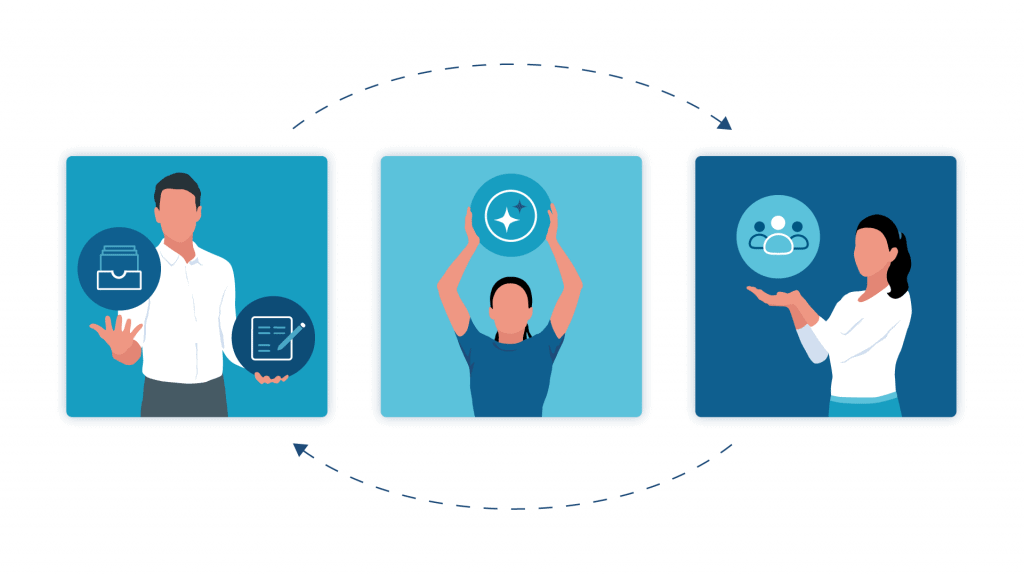
The content experience framework has six core elements:
Goals and objectives
Almost every marketing advice begins with mentioning goals. But that’s for a reason. Defining goals helps gain clarity about the direction of your initiative. It helps you outline the purpose for the strategy and define what the final outcome of the process should look like.
Another benefit of setting up goals for a content experience framework is that they make measuring progress so much easier. You can think of goals as milestones. Every such milestone you reach suggests progress toward completion.
So, as the first step, define clear goals for your content experience strategy.
Consider how you want the content to impact prospects. Think about the actions you want prospects to take on the content, too. These might suggest the overall goals of the strategy.
Audience research
This stage is all about understanding your audience:
- Who they are,
- How they consume content,
- What topics interest them the most at different stages of the buying cycle,
- What sort of engagement they’re looking for, and so on.
The objective here is to understand how your audience engages with content at every stage of the buying process.
Content audit and mapping
Content audit helps you assess the existing assets – blog posts, videos, visuals, product imagery, product documentation, etc. – you have. The process helps you understand your library of content and identify potential relationships between different assets.
To make it easier to do, we recommend that you map each asset to a relevant:
- Topic.
- Stage of the buying cycle.
- Persona or audience segment.
- Campaign.
Even a simple classification as this will immediately highlight which assets go well together and should be interconnected and which ones need additional resources to build relevant content hubs.
Content creation
If done well, the content mapping should have revealed topics that your audience is looking for, but you haven’t covered already. The next step after that is to start creating content to close those gaps. Naturally, there is more to it than just creating page after page of new content.
In fact, for each piece, you should:
- Identify the most relevant format to convey the information.
- Plan how you’re going to distribute the content to the target audience.
- Outline what information to include (or how to structure the asset) to deliver the highest impact.
- Define how you’re going to create topical relationships between this asset and other pieces that are relevant to it.
This is a long stage. Creating all this content will take time, after all. But it’s also a critical one because without closing those content gaps, you’ll always miss critical assets to continue engaging your prospects or customers further.
Personalisation
Personalisation is your secret weapon to captivate users and attract their attention to each content asset. That’s because when prospects find content that directly speaks to their concerns, they’re more likely to engage with content but also, explore more pages, and interact with your brand.
In the context of content experience, personalisation is all about delivering the right content at the right time. It starts with finding ways to position the most relevant content at every stage of the buying cycle. But you can go further and use user behaviour and preferences to present custom-tailored content recommendations to engage the person even further.
Why is personalisation so important? For one, because it captivates users. But it can also make them feel valued. When your content anticipates and addresses your audience’s requirements, it tells them that you understand their needs. And that one thing alone will lead to higher levels of satisfaction and loyalty.
Routing and content distribution
The final step of the process is taking both your existing and newly created content and positioning it in front of your target audience.
At CELUM, we refer to this process as routing content to relevant channels. In practice, this means distributing content to three specific media:
- Owned – which includes your website, blog, branded social media accounts, and any other resource that the company owns.
- Earned, a category that encompasses any free but not owned resource where you could place the content. Examples of earned media include PR activities, third-party content or media outlets, press, media publications, and more.
- Paid, which refers to any paid content promotion, including social media advertising, pay-per-click advertising, influencer marketing, paid content placements, and more.
How to measure content experience - Key metrics and content experience KPIs
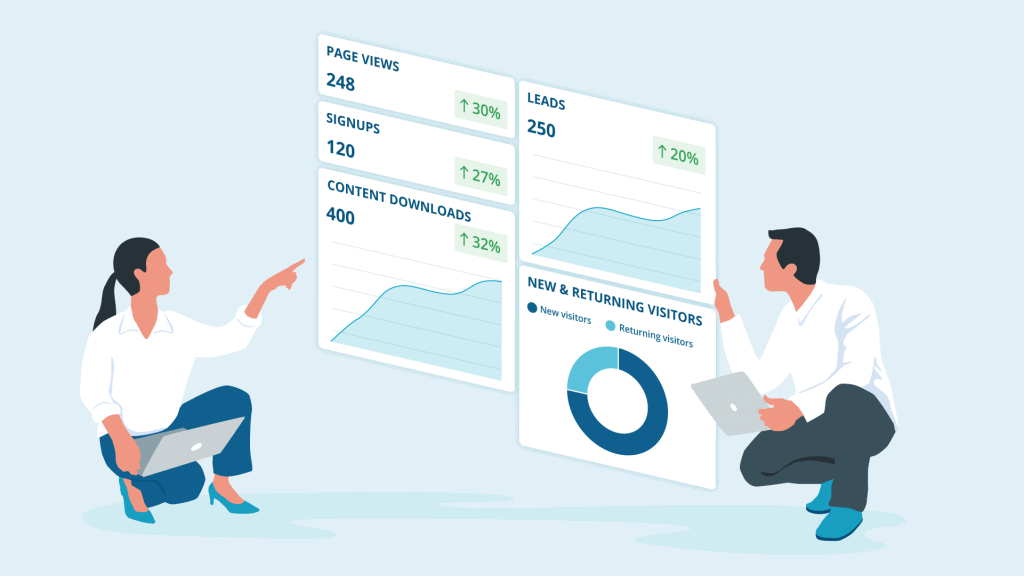
Content experience is not only a difficult concept to grasp, it can also be challenging to measure. How do you evaluate such an elusive thing as someone’s personal experience with content?
Luckily, there are certain metrics that can suggest whether customers have positive experiences with your content strategy. To uncover their insights, however, you must measure three different aspects of content experience:
Content consumption. Metrics in this category help you evaluate whether customers reach your content at all.
Consumption metrics to track:
- Traffic growth,
- Search engine rankings,
- Page views,
- Overall time on site,
- Content downloads.
Engagement metrics help you establish whether your distribution efforts attract the right customers and whether these people find your content valuable.
Engagement metrics to track:
- Percentage of returning visitors,
- Average number of pages per visit,
- Social media engagement (new follows, shares, comments, reposts, etc.)
- Time on page per content asset
- Bounce rate
- Click-through rate (CTR)
Finally, ROI metrics, as the name suggests, reveal whether your content delivers the desired result.
The metrics you track will relate to your overall campaign objectives. Overall, however, the most common ROI metrics include:
- No of new leads,
- No of signups,
- No of offers redeemed,
- Other conversions that you aim to achieve.
And that’s it…
That’s everything you need to know about content experience to start developing such a campaign for your brand.
Looking to boost content experience? Check out how CELUM’s Content Supply Chain platform helps organisations manage their content assets and boost content production. Book a demo now.
In our free guide, you can find out how effective Content Supply Chain management works and which strategies will help you optimize your process and achieve better results.