Companies face the challenge of presenting their brand consistently across numerous channels and touchpoints. Different departments, external partners and fast‑moving digital platforms can quickly become a risk factor. Brand guidelines provide the necessary framework to strategically manage brand identity and ensure operational efficiency. Here, you’ll learn how corporate design guidelines work and the role modern Digital Asset Management systems play in this process.
Table of Contents
What Are Brand Guidelines?
Brand guidelines are a normative set of rules that define how a brand should appear visually, linguistically and conceptually. These guidelines, compiled in a style guide, set binding standards for logo usage, colour systems, typography, imagery and tone of voice. They serve as a central reference for all stakeholders – from marketing teams and agencies to sales partners – ensuring a unified brand presence across all media and formats.
The Benefits of Corporate Design Guidelines
Brand differentiation: Brand guidelines establish clear visual and linguistic codes that distinguish your brand from competitors. Consistent brand management creates uniqueness in saturated markets.
Increased brand recognition: Repeated, standardised brand experiences become anchored in the audience’s memory. A style guide ensures that every touchpoint strengthens brand perception.
Accessibility for external partners: Well‑structured guidelines allow people outside the organisation – even those without deep brand knowledge – to apply branding correctly. Clear documentation reduces coordination effort and errors.
Complete coverage of all application areas: From print materials to digital channels and events – brand guidelines account for all use cases and define context‑specific rules.
Scalable development: Brand management systems enable continuous adaptation of guidelines to new requirements. Versioning and brand governance mechanisms ensure the integrity of the framework.
Dynamic Branding
Recognisability, consistency and a solid level of brand recall do not mean that branding must be set in stone. On the contrary – digital ecosystems require adaptive brand management. Rigid rulebooks become a hindrance; a brand must be lived to stay relevant and keep pace with a constantly changing world. Dynamic branding allows controlled flexibility within defined parameters: brand elements can adapt to formats, platforms and contexts without compromising the core identity.
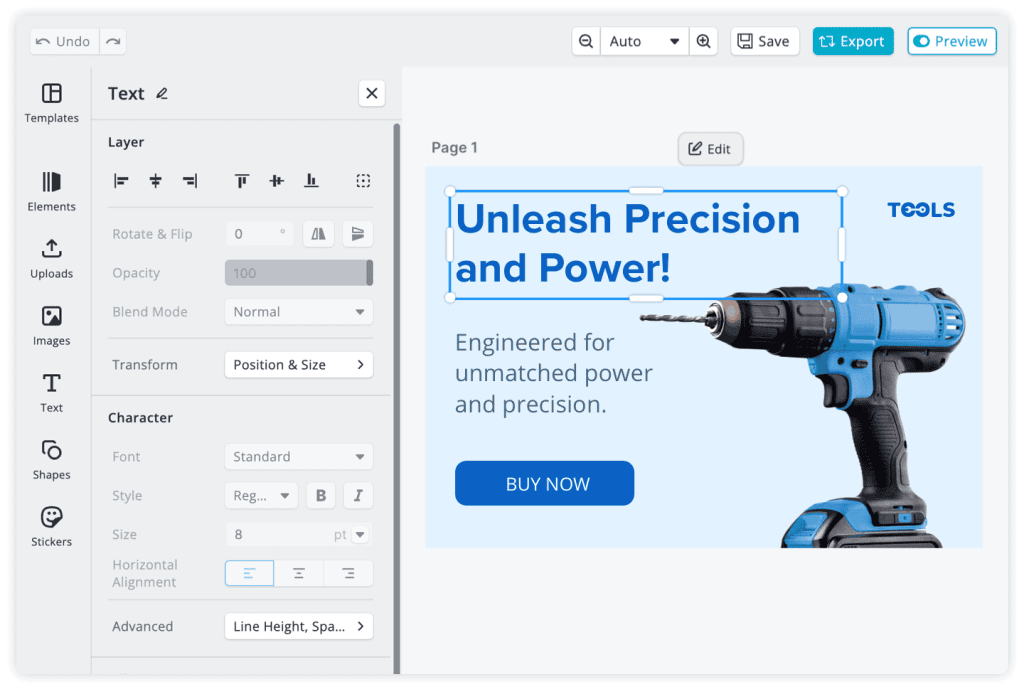
Content templates provide a stable framework that, through flexible placeholders, create the space needed for dynamic branding. They enable efficient, automated adaptation of brand elements to different target groups and contexts at scale – resulting in relevant brand experiences with strong recognisability.
What Should Be Included in a Style Guide?
Visual Identity
Logo: Primary and secondary usage variants with exact specifications, clear space around the logo and minimum sizes for different contexts.
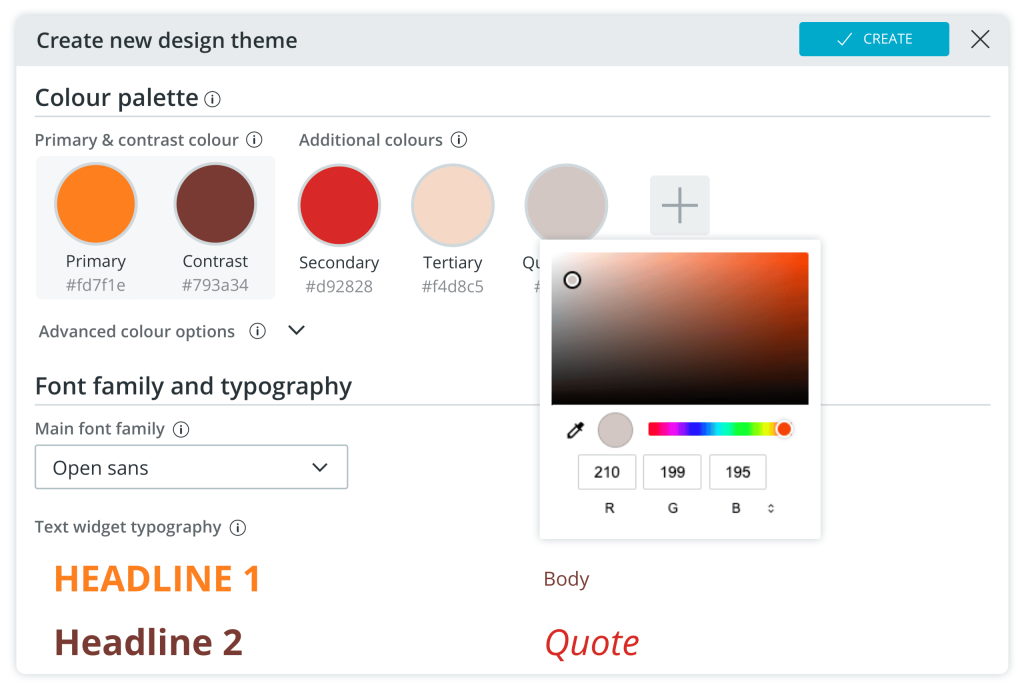
Colour palette and colour combinations: Primary and secondary colour systems with precise CMYK, RGB and HEX values. Definition of permissible combinations and contrast ratios for optimal legibility.
Typography: Specification of font families for different levels of hierarchy – from headings and body text to captions. Includes font sizes, line spacing and alignment.
Image style: Aesthetic guidelines for photography and visuals: style, themes, perspectives and colour treatment. Includes examples of compliant and non‑compliant use.
Graphics & icons: Stylistic guidance for illustrations, pictograms and graphic elements. Defines line weights, corner radii and proportions.
Tone of Voice and Messaging
Brand voice: Character-defining attributes of brand communication – e.g. professional, approachable, innovative. This core attitude remains consistent across all channels.
Tone: Adaptation of the brand voice to specific communication contexts. Tone on social media differs from technical documentation or crisis communication.
Core messages: Elevator pitch, mission statement and vision as strategic communication anchors. These form the basis for all content.
Application Examples and Templates
Social media templates: Predefined layouts for various platforms with fixed image areas, text placement and brand elements.
Presentation and business documents: Standardised templates for PowerPoint, letterheads, email signatures and other business materials.
Brand Guidelines in Practice: DAM and Brand Management Software
Implementing brand guidelines operationally requires the right infrastructure to transform static rules into practical systems. Digital Asset Management (DAM) and specialised brand management software together form the technological foundation for consistent brand execution.
Central Control, Decentralised Use: Ensuring Brand Consistency with DAM
DAM systems act as the single source of truth for all brand assets. Automated versioning prevents outdated logos, colour codes or fonts from being used. Teams always access the latest approved version – eliminating manual checks.
Easy distribution and governance: DAM platforms enable granular access control: internal teams receive different permissions from external agencies or license partners. Download options can be restricted by file formats and usage rights. Compliance mechanisms prevent unauthorised modifications to protected assets.
Integrating corporate design guidelines into workflows: modern DAM systems integrate guidelines directly into asset management: metadata fields reference relevant rule sections, and document viewers show application examples alongside the assets. Brand‑templating functions allow users to adjust templates within defined parameters – text fields, image placeholders and colour variants remain compliant. The system technically prevents violations of core guidelines.

Enforcing Brand Guidelines with the Right Software
Specialised brand management platforms go beyond asset storage: they understand brand logic, enforce guidelines automatically and optimise workflows for brand consistency. Marketing teams adapt templates for local markets, external partners receive controlled access with pre‑aligned usage rights, and leadership gains dashboard‑based transparency on brand usage and compliance metrics. The platform becomes an active guardian of brand identity rather than a passive storage system.
Conclusion: What Makes a Good Style Guide?
Successful brand guidelines empower internal teams and external partners to deliver consistent brand execution across all offline and digital touchpoints.
- Digital‑first approach: Static PDFs are no longer sufficient – digital brand guidelines offer dynamic navigation, search features and automatic updates. Web‑based platforms ensure permanent accessibility and accuracy.
- Practical orientation: Guidelines go beyond abstract rules. Concrete examples, code snippets for developers and visual comparisons of correct and incorrect usage provide clarity.
- Comprehensive documentation: A good style guide provides context: Why does a rule exist? Which brand values underpin it? How flexible is interpretation?
Clearly explained dos and don’ts enable independent decision‑making in borderline cases.
Brand guidelines are not a limitation – they are the strategic foundation for scalable, consistent brand management within complex organisations.
FAQ on Brand Guidelines
What are brand guidelines?
Brand guidelines are a binding handbook that defines all visual and content‑related rules of a brand. They guide employees and partners to ensure a consistent appearance across all communication channels.
What are the five pillars of a brand strategy?
The five pillars are brand purpose, vision/mission, brand values, target audience and market positioning. Together, they form the strategic foundation for business decisions and the external brand image.
Why is a style guide important?
A style guide ensures brand recognition and prevents the dilution of brand identity through incorrect design. It also saves time and costs by providing clear design specifications for internal and external teams.
What elements does a style guide include?
A style guide covers key components such as logo variants, a defined colour palette, typographic rules, image style and tone of voice. It often also includes application examples and “dos and don’ts” to prevent design errors.
How are brand guidelines developed?
The process begins with defining the brand strategy and designing the visual identity (logo, colours, fonts). These elements are then documented in a rulebook and made centrally accessible as a document or online portal for all stakeholders.