In this post, you’ll find out what issues or challenges exactly you might have to deal with once you’ve launched a brand management strategy.
But let’s be clear here; we didn’t just write it to list these challenges.
First, we created this guide to show how these issues will affect your brand management efforts.
We also created it to help you prevent those issues (and their consequences) from affecting your brand image and perception.
And let’s face it, these consequences can be severe.
For one, 81% of consumers need to trust a brand before they’ll consider buying from it. As a result, if a brand fails to maintain consistency or become associated with negative practices, trust erodes—often leading to a significant drop in customer loyalty. For instance, research indicates that after negative publicity or misaligned brand messaging, as many as 30% of consumers might stop buying from the brand.
A research by Loken and Roedder-John, published in the Journal of Marketing (62/1998) (source) proved that inconsistent brand messaging can dilute the overall brand equity. This dilution not only weakens consumer perceptions of the flagship product but can also damage the broader brand family, ultimately reducing the company’s competitive advantage.
A lack of clear brand identity has been linked to lower conversion rates and a higher rate of abandoned online transactions, with studies suggesting that nearly 45% of consumers might abandon a purchase if their expectations aren’t met by a brand’s messaging.
As you’ll see shortly, many of these devastating outcomes are associated with issues with the brand management process.
Luckily, these issues are also preventable. For that reason, we’ve included a solution for each issue we’ve included here.
So, without further ado, here are the four biggest challenges companies face with brand management.
Quick disclaimer – Information in this post, particularly information relating to the actual brand management challenges, is based on a Brand Management Survey Report we’ve conducted at the end of last year.
You can read our complete findings here, and below, you’ll find what we’ve discovered about the challenges brands face with brand management.
Table of Contents
Challenge 1/ Integration of a Complex Tech Stack
The problem
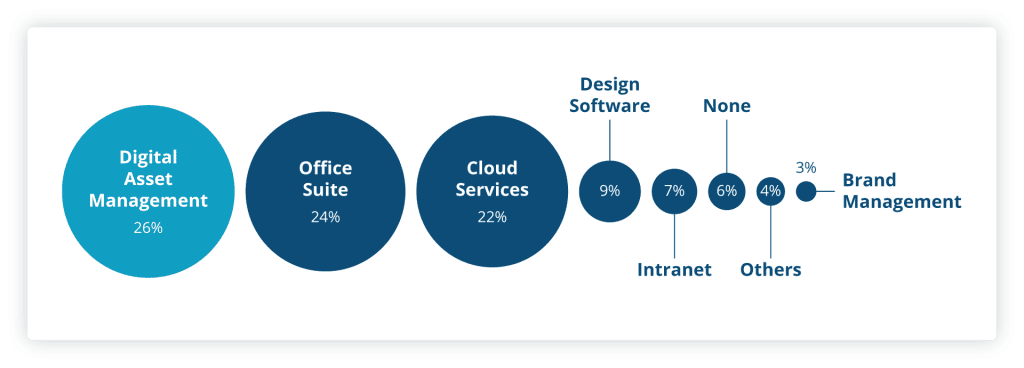
Our research found that nearly 45% of companies rely on multiple tools, up to four, to manage and optimise access to their brand assets and guidelines.
- The majority of those companies use a Digital Asset Management system.
- Many turn to Office Suite to do the same.
- Some use Cloud Services like Adobe.
- And interestingly, only 3% of companies utilise a dedicated brand management system and a staggering 6% admitted to having no tool stack for brand management.
Unfortunately, using many disorganised tools and systems can create significant issues with achieving a unified brand voice.
For one, managing a multi-tool tech stack without a centralised solution can cause productivity losses and lead to inconsistent representation of a brand across marketing channels and customer touch points.
In practice, this means that companies often have to deal with issues and costly mistakes arising from missing files, wrong versions of a file being used in projects, delays and more.
Their employees spend countless hours trying to locate correct versions of assets. In fact, according to a study by McKinsey, employees spend around 1.8 hours a day just trying to find correct assets and information. Weekly, this number adds up to 9.3 hours, more than a whole day’s work!
They have to complete numerous revisions due to errors and mistakes with assets, too, costing an organisation even more money.
The solution
Instead of relying on a multi-tool stack to manage the brand, utilise a dedicated Brand Management platform like CELUM to:
- centrally manage branding features such as logo, colours, visuals
- manage feedback and approval workflows
- manage brand guidelines
- enable everyone to use branding features correctly
- share brand assets safely through dedicated Portals, and more.
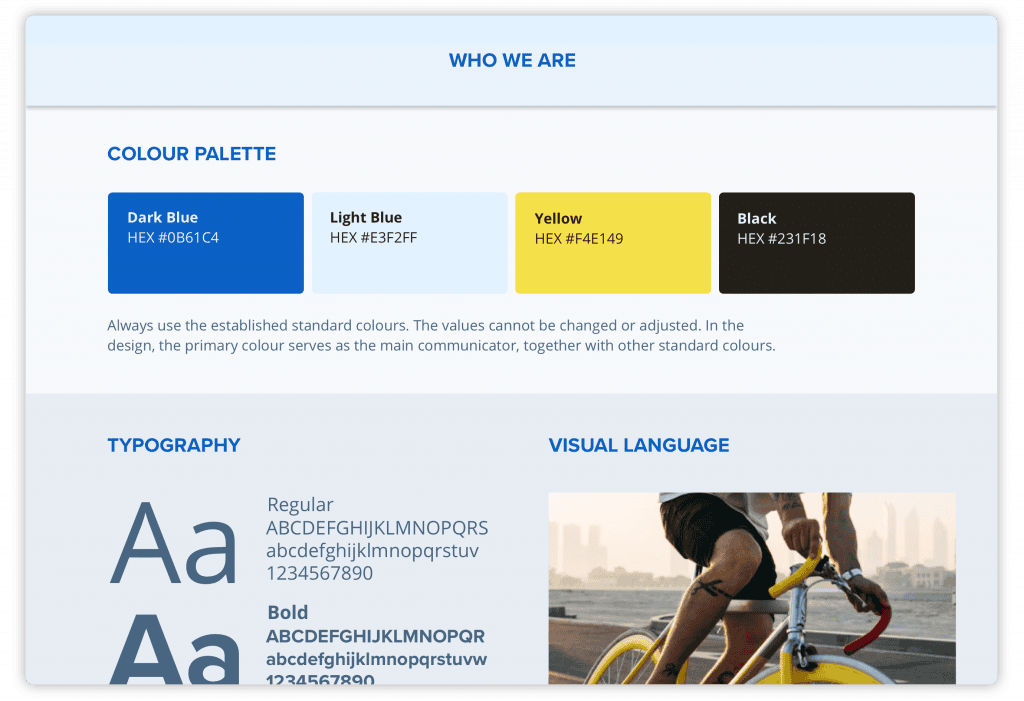
With a platform like CELUM you’ll be able to centralise all brand management activities into one application, and create a single source of truth for all brand management efforts.
NEXT STEP: Learn how CELUM Brand Management Platform will help you streamline all brand management processes into a single tool.
Challenge 2/ Inability to manage assets properly
The problem
Unfortunately, multi-tool stack, and insufficient tools often result in chaos (and we do use this word consciously here) with asset management.
And what’s particularly challenging with it is that asset management is one of the core brand management activities, one that many other projects simply rely on.
Sadly, though, in many organisations, assets are scattered across multiple devices and harddrives. Many companies either use a number of cloud drives or, worse yet, allow employees to set up accounts on cloud storage services. This results in everyone keeping their assets siloed, inaccessible to others.
In turn, teams spend hours trying to locate the right files, and we’ve already quoted how much time they waste on that.
However, poor asset management does not limit itself to having files stored in multiple locations.
Poor file naming and meta data practices result in no one really knowing how to look for and retrieve assets. That, in turn, leads to duplicated efforts and confusion.
Similarly, issues with duplicating files or version control can halt or severely hinder many brand management efforts.
The solution
Firstly, it’s amazing to be able to say that 26% of companies already avail of this solution – using a Digital Asset Management solution to manage brand assets.
A Digital Asset Management (DAM) solution like CELUM helps streamline and centralise how digital assets are stored, organised, and accessed by the team. In other words, DAM becomes a single source of truth for all company brand media assets.
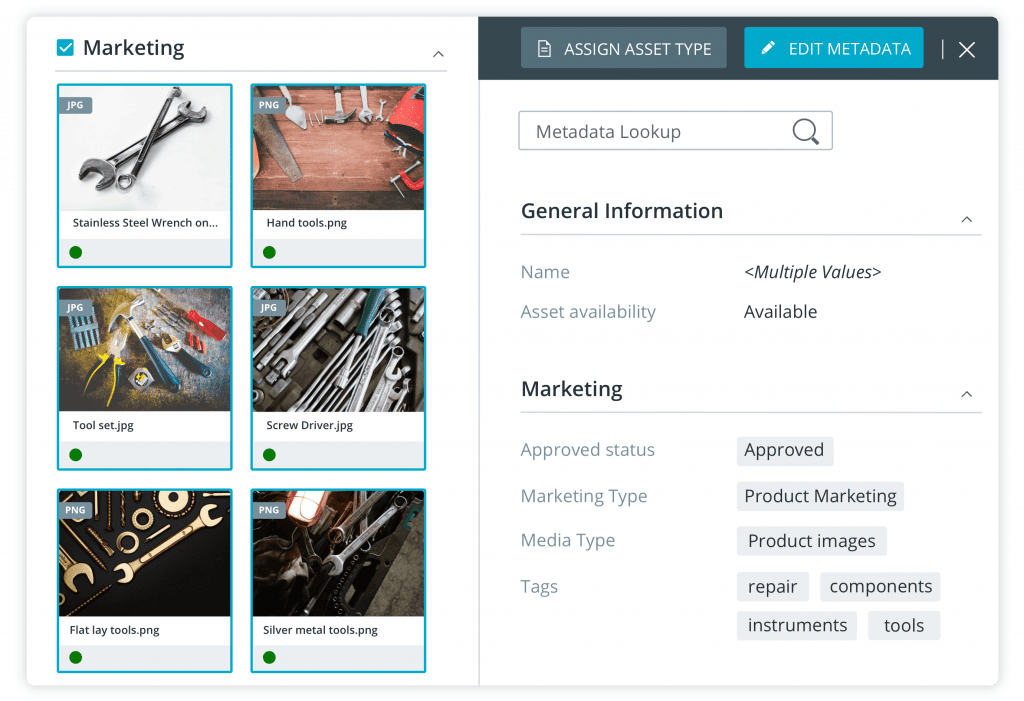
- Needless to say, with having all brand-related assets in a single location, you’ll be able to maintain and further improve brand consistency across all channels.
- You’ll reduce content production time, and streamline how brand assets are being created.
- You’ll also be able to streamline how your brand assets are distributed across the organisation and with its partners – agents, resellers, etc.
NEXT STEP: Learn more about how CELUM Digital Asset Management will help you manage brand assets properly.
Challenge 3/ Limited collaboration features
The problem
Brand management is rarely a one-person process. In fact, our survey proved that the responsibility for maintaining a clear and unified brand image falls across several functions – from marketing and brand managers, designers, to content creators and even salespeople.
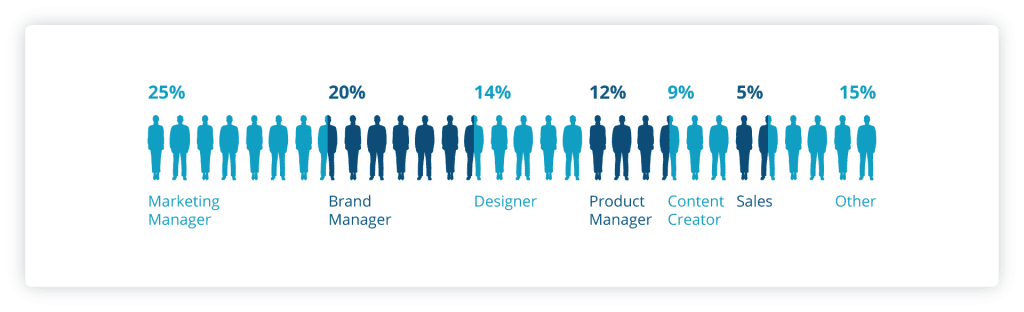
In fact, a typical brand management team would often include a VP of marketing, brand manager, creative director, art director, designers, copywriters, PR and social media managers, and many more people.
This also means that all these people must communicate and collaborate with each other to manage all the aspects of the process.
They all need to have access to project’s brief and specifications.
They need to be able to access and discuss whatever assets they might need to complete their parts of the project.
They should work to a unified system and task list, exchange ideas, comments, help each other out, and so on.
And all this is quite challenging when a.) everything related to a project is scattered across various tools, and b.) communication about it happens on yet another channel.
Even just having teams to discuss a project in a different tool than the one they use to manage it can lead to serious communication issues.
- Every message or comment shared happens out of context of the actual project.
- Information shared in quick conversations doesn’t get recorded, and might often simply get forgotten.
- Comments in passing often lack additional information that would explain the issue at length, and so on.
The result: Setting errors and delays aside, poor communication can lead to conflicts, crises, a lack of project clarity, issues with accountability, and more.
The solution
Brand Management platforms like CELUM offer powerful content collaboration and approval solutions:
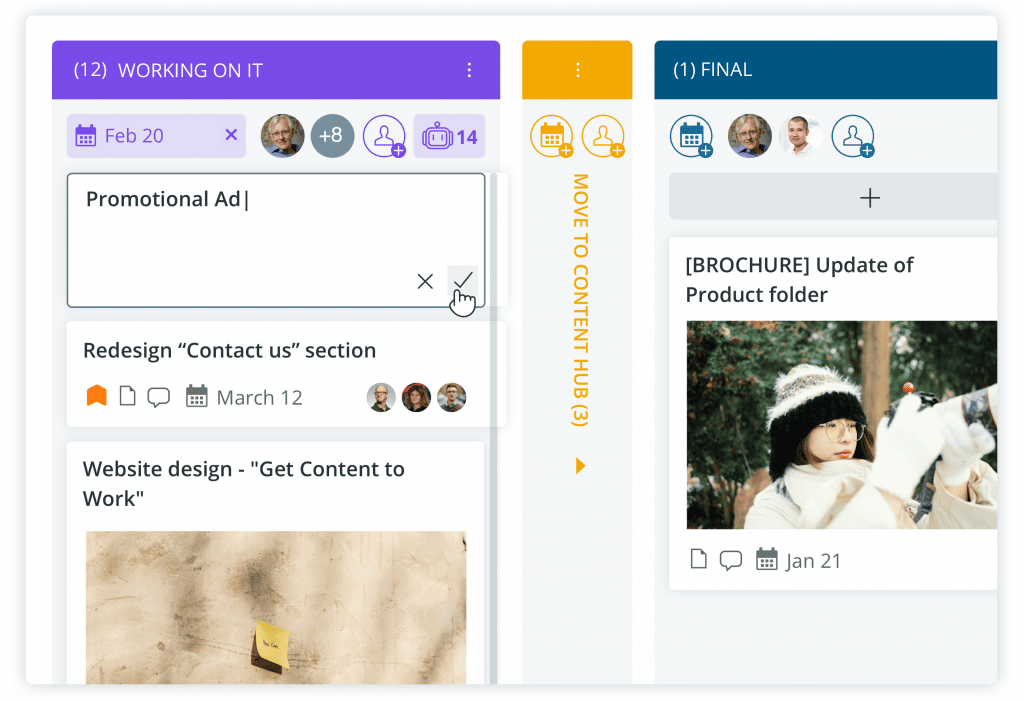
- Kanban-based project and task management system.
- Briefing systems.
- Comments and collaboration features.
- Visual review and approval systems.
- Access control and compliance, and more.
NEXT STEP: Learn more about CELUM Content Collaboration.
The 2024 state of brand management tools in europe
Gain the latest insights into brand management with our 2024 Brand Management Survey! We surveyed marketing and brand managers from medium and large B2B and B2C organisations across Europe to understand the current state of Brand Management tools – and the results are insightful.
Challenge 4/ Inability to easily scale brand efforts
The problem
Today’s markets demand speed, agility, and the ability to adapt swiftly to changing customer needs, expectations, market conditions, and dynamics.
This alone puts enormous pressure on brand efforts, requiring not only that projects be done faster but that more projects be done within that time.
In other words, to stay current, organisations must continuously scale their brand efforts – expand to new channels, markets, and adapt existing strategies accordingly.
Unfortunately, as we’re certain you are well aware, this is easier said than done.
Resource constraints, lack of talent, outdated processes, challenges with communication, multi-tool stacks not optimised to handle brand management efforts, siloed teams and more pose huge issues with maintaining even the current brand content production, let alone scaling it further.
It’s no surprise that 17% of our survey respondents named inability to scale branding efforts as their primary challenge.
The solution
With this challenge, the solution is more complex than just implementing a dedicated brand management platform. It is where you need to start. However, to be able to scale brand efforts successfully, you will also need to implement dedicated processes, workflows, and more to ensure that projects can be quickly set up correctly, all tasks specified, and you use as much automation as possible to speed up the process.
Here’s how CELUM Brand Management helps you achieve all this and scale your branding efforts further:
- CELUM’s brand management backend minimises the manual effort required to manage brand assets and metadata.
- Self-service portals allow you to share brand guidelines in one single location and ensure that internal and external users have all the information they need to manage the brand correctly.
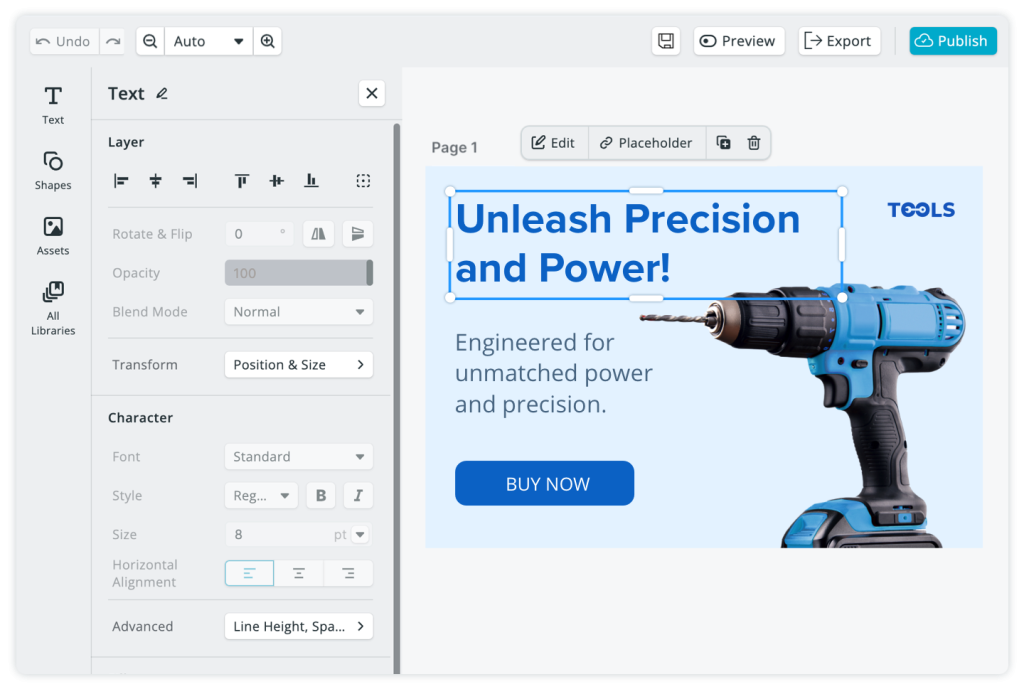
- Brand templates allow employees to create their own branded content based on pre-defined templates.
- Workflows allow you to set up project templates and use automations to speed up their various aspects.
- AI Image Search will speed up many elements of typical projects.
- Review and approval processes and automations will help you get projects signed off faster.
The above is just the tip of the iceberg.
Want to learn more about how CELUM can help you improve brand management processes? Book a demo and let us guide you through the platform.