High‑end Digital Asset Management (DAM) software is relied upon by medium and large enterprises that view their brand and product content as strategic assets—ones that can directly influence success or failure on the digital shelf. In this context, controlling who can access which assets, and for what purpose, is not optional. It is essential for mitigating risk while enabling people to find and use content quickly and confidently.
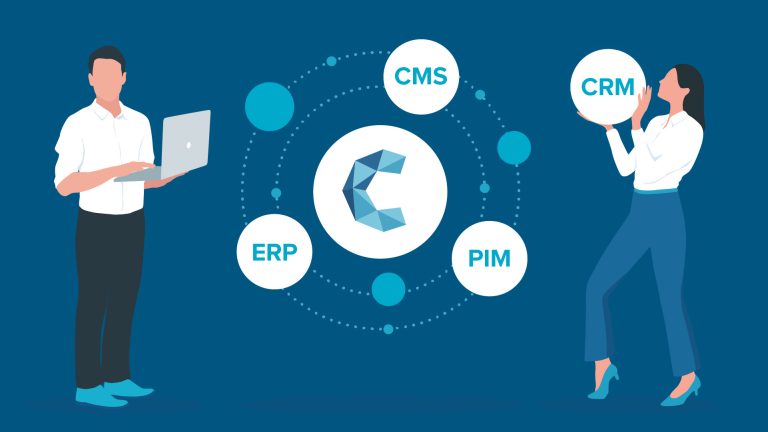
What many organisations have yet to fully recognise is that modern DAM systems are no longer just sophisticated file repositories. They are becoming the orchestration foundation for AI driven workflows, with human oversight embedded by design.
Table of Contents
From Asset Access to AI Orchestration: The Evolving Role of User Management
As DAM platforms increasingly connect with downstream systems—including AI applications—while also embedding review and approval workflows, the importance of robust user management grows significantly.
For example, organisations often rely on DAM-native review and approval workflows to validate AI-generated content before it is published or reused. This is a critical safeguard against legal, compliance, and brand risks. However, the effectiveness of this process depends entirely on user management: only the right stakeholders—legal, brand, or product experts—must have permission to review, comment on, and approve content within these workflows. If roles and permissions are misconfigured, unverified AI-generated assets could be approved and distributed at scale, amplifying risk rather than reducing it.

Similarly, DAM systems are increasingly used as trusted content sources for AI agents. Consider a customer-facing AI assistant that answers product-related questions by extracting information from manuals, technical documents, and presentations stored in the DAM. In this scenario, user management determines who can upload, modify, and curate the source content that the AI relies on. If the wrong users have access to manage these assets—or if governance is too loose—the AI may deliver outdated, inaccurate, or even sensitive information to customers.
These examples highlight a fundamental shift: user management is no longer just about controlling access to files. It directly shapes how AI systems behave, what they learn from, and what they ultimately deliver. Mismanaged permissions don’t just create internal inefficiencies—they can cascade into automated decisions and external customer experiences.
What Does User Management Mean in a DAM System?
User management is the framework that controls, governs, and audits how people interact with digital assets and workflows within a DAM system.
Enterprise grade DAM systems typically provide several layers of user management to support scale and complexity:
User Roles
User roles are predefined, high level access profiles that establish a clear and consistent permission model across the system. Advanced DAM platforms also support custom roles to reflect organisation specific requirements.
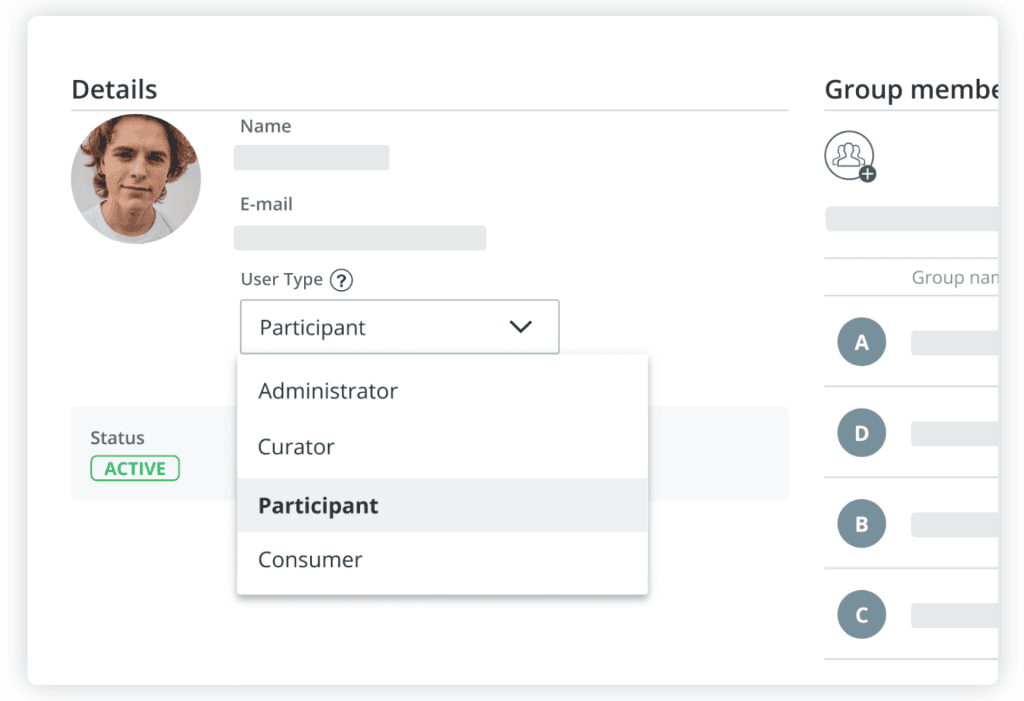
User Groups
While individual role assignment may work at small scale, user groups are essential in enterprise environments. Any user added to a group automatically inherits its permissions, simplifying onboarding and offboarding.
Global Permissions
Global permissions define which actions a user or group can perform across the DAM system, such as uploading assets or editing metadata. They establish a baseline level of access unless further restricted.
Local Permissions
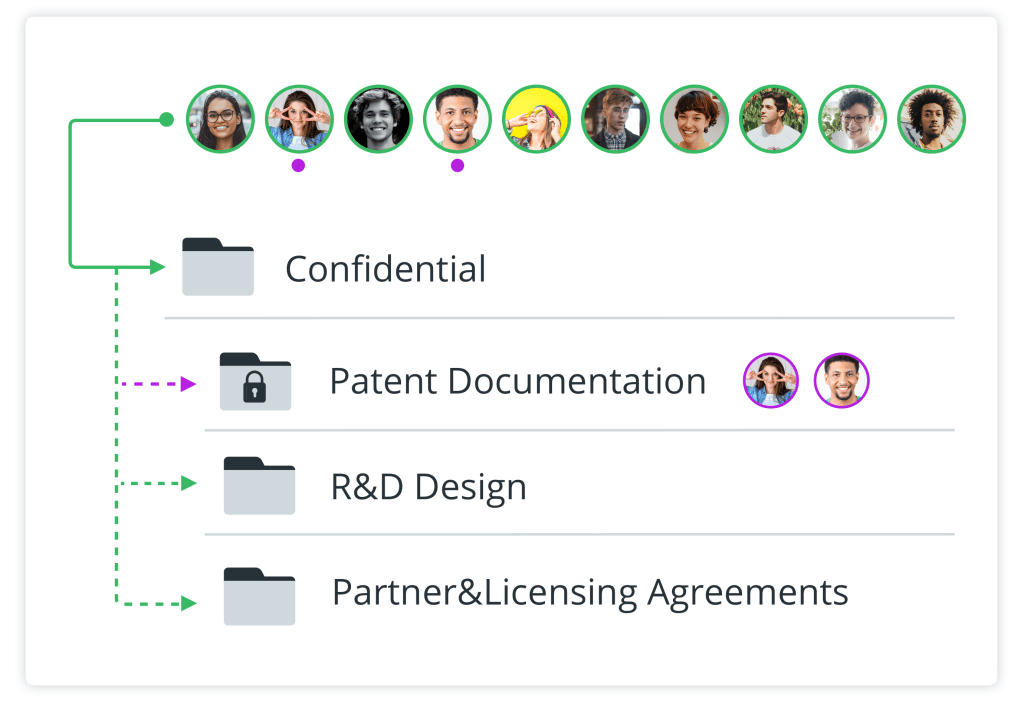
Enterprise governance often requires more granular control. Local permissions allow administrators to refine or override global permissions within specific folders or at metadata level.
Audiences
Beyond backend users, many DAM systems support audiences. Audiences access curated DAM frontends rather than the administrative interface, providing tailored, user friendly access to approved content without exposing the full DAM environment.
The Business Impact of Strong User Management
Strong user management is not a technical nice to have. It is a foundational capability that directly affects security, efficiency, compliance, and long term scalability.
Security and Risk Protection
Enterprise DAM systems store highly sensitive information, from brand critical assets to confidential product data. User management ensures that access is restricted to authorised individuals. Without this control, organisations significantly increase their exposure to internal misuse and external security breaches.
Role Clarity and Operational Efficiency
Enterprise users interact with DAM systems in very different ways—from administrators and approvers to contributors and viewers. User management enables clear role definitions that align access with responsibility. This reduces complexity, accelerates onboarding, minimises errors, resulting in smoother day to day operations.
Compliance and Auditability
Regulatory frameworks such as GDPR, ISO 27001, and the EU AI Act require organisations to demonstrate strict access control and accountability. Effective user management provides traceability, detailed audit logs, and consistent enforcement of permissions.
Scalability as the Organisation Grows
Enterprises are constantly evolving through growth, restructuring, and acquisitions. Scalable user management supports bulk onboarding and offboarding, integration with identity providers, and automated permission changes based on roles or groups.
A Better User Experience
Although often invisible when done well, user management has a direct impact on user experience. By removing unnecessary features and adapting interfaces to roles, it allows users to focus on their work without friction. The result is higher adoption and greater trust in the system.

How Does It Work in Practice?
The following scenario illustrates how user management is not just about access control; it is also a strategic capability that ensures security, efficiency and relevance on a large scale.
Consider a high-tech manufacturing company that operates globally. It manages confidential intellectual property restricted to R&D teams and product owners, while also supporting more than 30 markets and an extensive retail network that requires access to approved, localised marketing and sales assets.
To address these needs, the company uses two different user management approaches within its DAM system.
A dedicated user group is created for sensitive content and granted access to a restricted catalogue containing confidential assets. All users within this group share the same role, ensuring consistent permissions and simplified governance. Although global permissions are defined at group level, local permissions are intentionally overridden at folder level to fine-tune user specific access.
In parallel, a second catalogue is used to distribute products and marketing materials to different regions. Here, user groups are organised by market and responsibility. Within the APAC market, for example, the company defines three distinct groups: one that only consumes assets, one that participates in selected workflows, and one that creates and manages content for the region. This structure is replicated across markets, resulting in three groups per region.
Folders are created for each market and shared with the relevant groups. Each group experiences the DAM differently based on its assigned role — what they can see, contribute to, or manage is fully aligned with their responsibilities.
This scenario illustrates how structured user management can help global enterprises protect sensitive intellectual property while providing fast, role-appropriate access to approved content across markets.
The Risks of Weak User Management
As DAM systems expand in scope and connectivity, weak user management introduces operational friction and material risk.
Permission Sprawl and Over Access
Over time, users accumulate permissions through role changes or temporary access that is never revoked. This results in over‑access, increasing security and compliance risk.
Lack of Granularity
Basic access models often lack the precision enterprises require. When permissions cannot be controlled at the level of folders, metadata, or workflows, organisations are forced into broad rules that undermine governance.
Manual and Error Prone Administration
Managing users individually does not scale. Manual onboarding, offboarding, and permission changes introduce delays, inconsistencies, and human error—particularly in decentralised organisations.
Increased Risk in AI Enabled Workflows
As DAM systems feed AI‑driven processes, uncontrolled access can trigger unintended actions at scale. Weak user management limits oversight, separation of duties, and responsible AI use.
How to Strengthen User Management in Your DAM
To reduce risk and improve governance, organisations should take a structured approach:
- Choose a DAM with a clear role model that reflects real usage patterns, such as administrators, approvers, contributors, and viewers.
- Adopt a group‑based permission model to simplify administration and ensure consistency.
- Apply the principle of least privilege and review access regularly.
- Use granular permissions where needed, particularly for sensitive assets and AI‑related workflows.
- Integrate with identity and access management systems to automate user lifecycle management and enforce consistency.
Why It Pays to Invest in a DAM with Robust User Management
Investing in a DAM with robust user management is a strategic decision, not a technical upgrade. As organisations scale, the number of users, assets, and AI-enabled touchpoints increases rapidly, making loosely governed access models unsustainable. Strong user management ensures that the right people—and systems—can access the right assets at the right time. In an AI-driven, highly regulated environment, it becomes the foundation for secure collaboration, auditability, and sustainable innovation.