Digital content can be copied and shared in seconds. To protect valuable digital assets like product documentation, marketing materials, or media content from unauthorised use, companies need intelligent digital rights management systems. Without a solid DRM strategy, they risk legal warnings, reputational damage, or even the loss of their digital assets and revenue.
Table of Contents
What is Digital Rights Management?
Digital Rights Management (DRM) refers to technologies and processes that manage and protect digital content from unauthorised use, distribution, or manipulation. A DRM system controls who can access digital files, how they can be used, and under which conditions they may be shared or published.
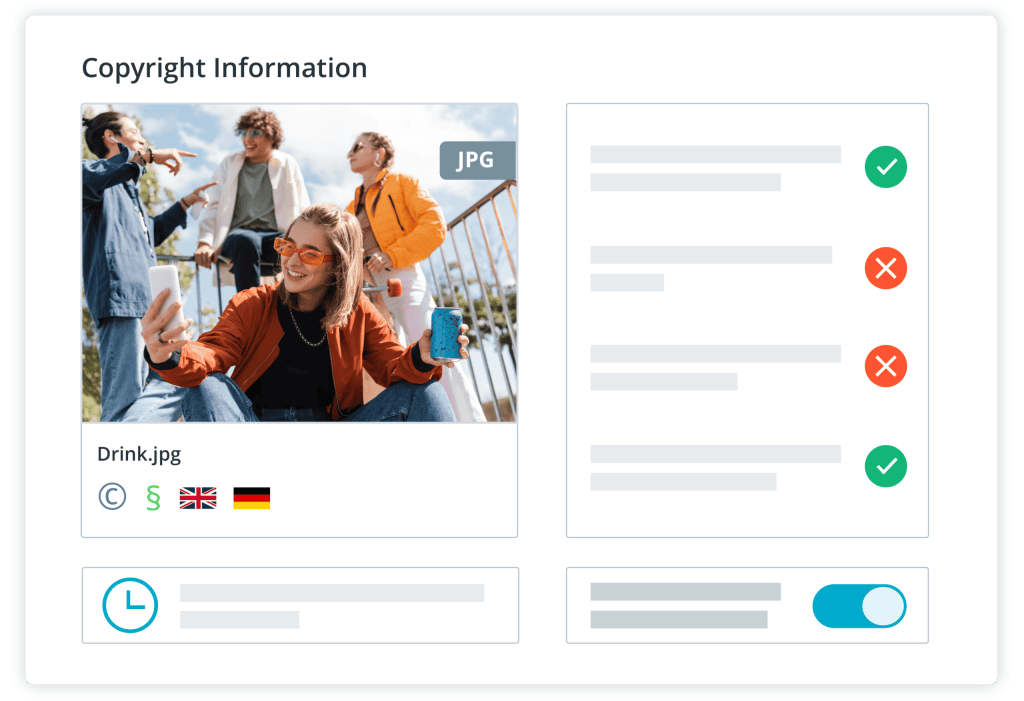
Screenshot of a copyright management interface with image preview, language and legal information for automated rights validation – ensuring brand consistency and quality assurance in digital asset management.
Digital rights management combines technical protection measures with organisational policies. While technical components such as encryption and access control ensure secure implementation, legal and contractual frameworks define the actual usage rights.
Digital rights management consists of several functional layers that can be combined depending on your needs:
Access control
Tracking
Asset restrictions
Watermarking
Automatic face recognition
Access control
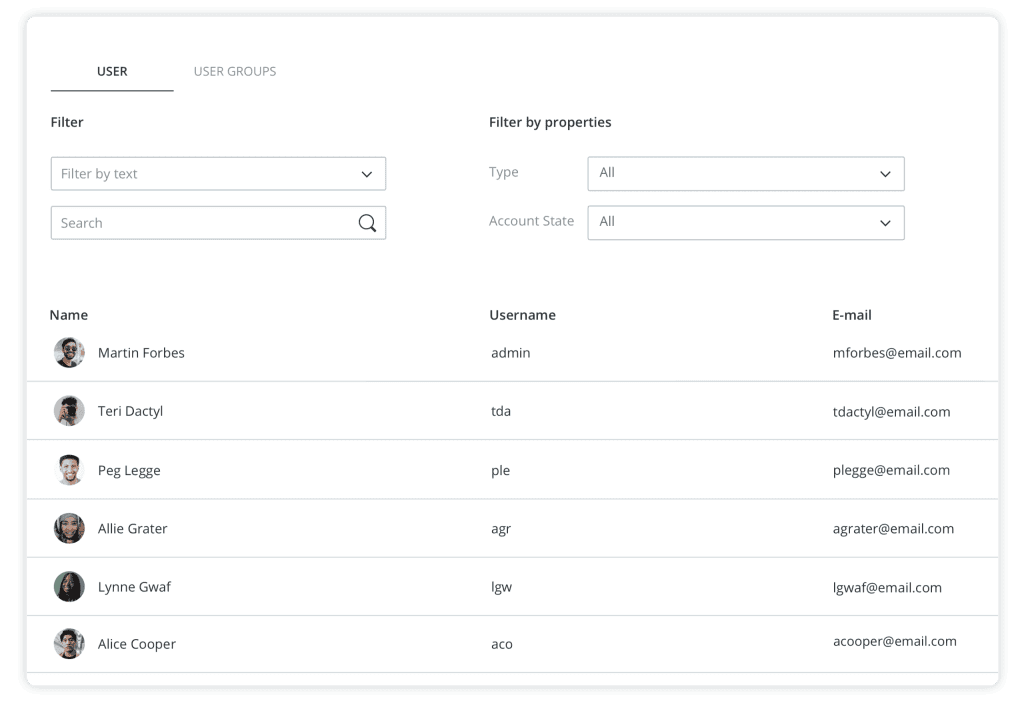
The foundation of any DRM strategy is precise control over who can access specific content. With role-based permissions, you can ensure that team members only see files relevant to their work.
Screenshot of a user management interface in Digital Asset Management for controlling access rights, user groups, and roles – ensuring brand consistency, security, and quality assurance.
Tracking
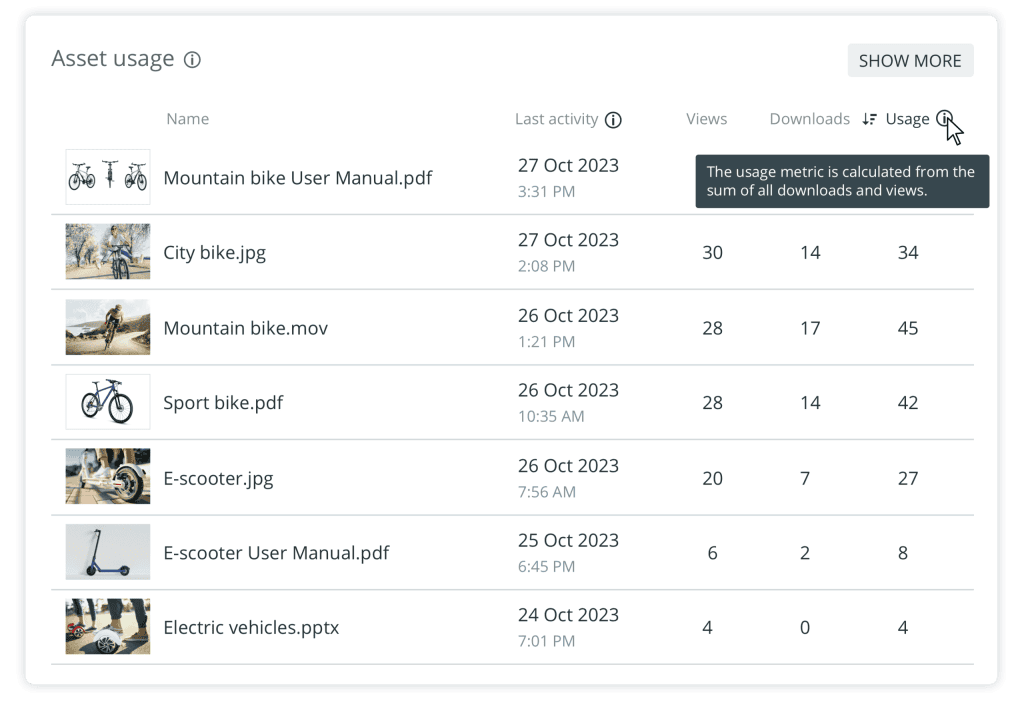
Tracking features make it possible to monitor who has viewed or downloaded files. This helps detect and prevent unauthorised usage.
Screenshot of an asset usage analytics dashboard in Digital Asset Management showing metrics for downloads, views, and activity – ensuring brand consistency, efficiency, and quality assurance.
Asset restrictions
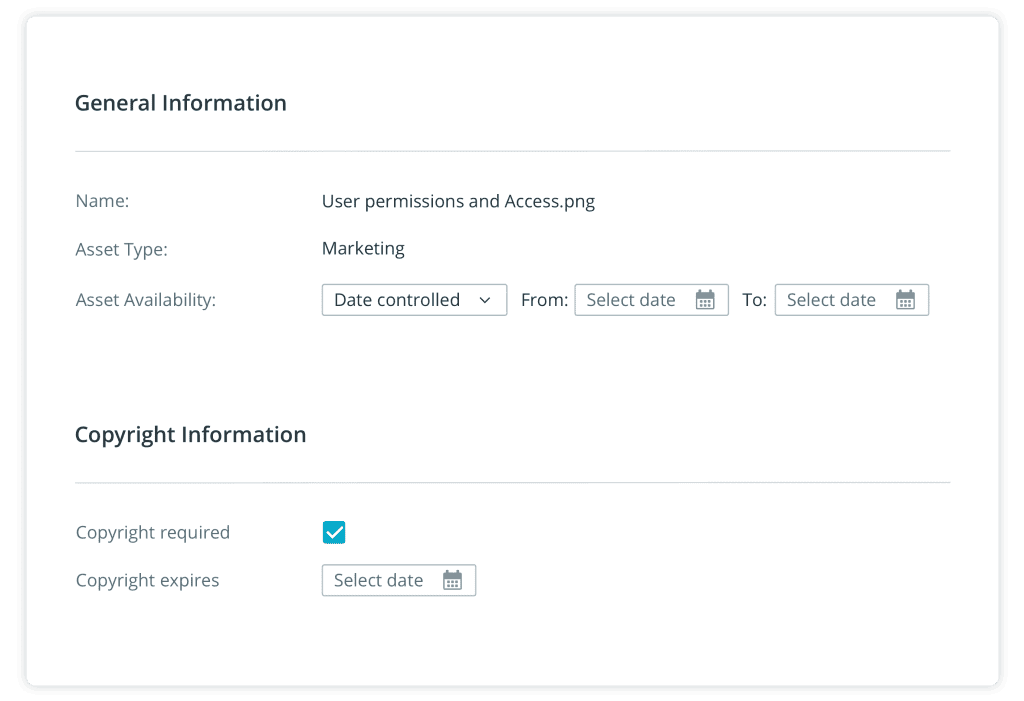
An effective DRM system not only defines who has access but also what can be done with the content. This includes restrictions on printing, copying, editing, or forwarding files. You can also set time limits, such as temporary licences for partner companies.
Screenshot of asset management settings with copyright and availability information in Digital Asset Management – ensuring legal compliance, brand consistency, and quality assurance.
Watermarking
Many DRM solutions integrate visible or invisible watermarks into digital files. These help trace the origin of content and identify the original recipient in case of misuse.
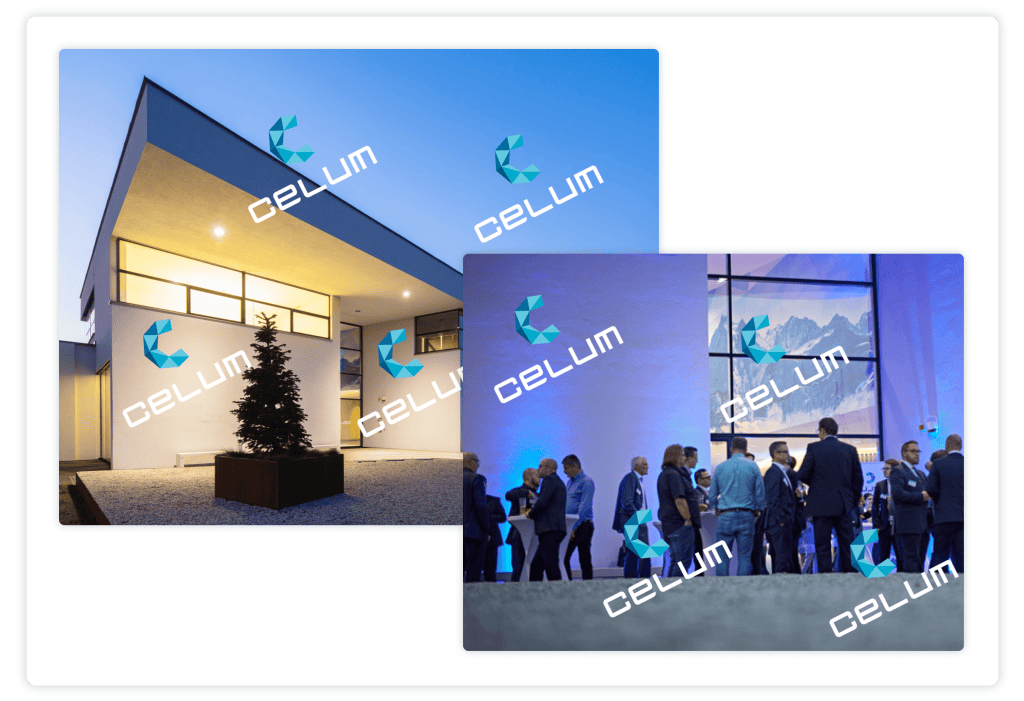
Example images with automatic watermarking in Digital Asset Management – ensuring intellectual property protection, brand consistency, and quality assurance.
Automatic face recognition
AI-powered DRM features can recognise people in your content and link them directly to model releases or licence agreements. Once the defined period expires, access is automatically revoked.
Screenshot of automatic facial recognition in digital asset management with search results for an individual – for efficient image management, brand consistency, and quality assurance.
What are the benefits of DRM?
Implementing a robust DRM system offers companies numerous advantages that go far beyond simple copy protection:
Protection of intellectual property: The most obvious benefit is reliable protection against piracy and unauthorised distribution. Companies invest significant resources in creating high-quality digital content — from software and training videos to technical documentation and marketing materials. DRM ensures that these investments retain their value by preventing uncontrolled copying.
Control over distribution: With digital rights management, you retain full control over how your content is shared and used. This is especially important when working with external partners, agencies, or suppliers. Instead of granting full access, you can assign specific, restricted permissions.
Compliance and legal security: In many industries, companies must comply with strict regulations when handling sensitive data. A DRM system helps you stay compliant by documenting and controlling access. This not only prevents data breaches but also protects you from legal consequences.
Traceability and analytics: Modern DRM solutions offer detailed insights into content usage. You can see which files are most popular, who uses them, and how often they are accessed. These insights are valuable for strategic decisions and content portfolio optimisation.
Why does DAM need DRM?
Digital Asset Management (DAM) systems are the heart of content organisation in modern businesses. Often called content hubs, they centralise the creation, management, and distribution of all digital assets — from images and videos to documents and 3D models.
Integrating Digital Rights Management into a DAM system is crucial for several reasons:
Central control: A DAM without DRM is like a library without a lending system. The combination creates a unified environment where storage and permission management work hand in hand.
Protection during distribution: Without integrated DRM, approved files can be shared without control. DRM ensures that permissions remain valid even after downloading.
Brand protection: A DAM with DRM prevents the use of outdated logos or unapproved campaign materials. Only authorised versions are available.
Compliance: Digital rights management ensures that access to sensitive assets such as personal data or patented developments is strictly controlled and documented.
External collaboration: When working with agencies or partners, a DAM with DRM enables temporary, limited access — for example, view-only permissions without download rights.
Screenshot of a project overview in Digital Asset Management showing internal and external team members collaborating on marketing content – ensuring efficient teamwork, brand consistency, and quality assurance.
DRM vs. IRM: What’s the difference?
While traditional DRM was developed mainly for consumer media like music, videos, or e-books, IRM (Information Rights Management) focuses specifically on protecting business information and documents.
A modern DAM system combines both approaches, offering comprehensive protection for all types of digital assets — from marketing materials to confidential business documents.
The importance of DRM in a nutshell
Digital Rights Management is far more than a technical copy protection tool — it is a strategic instrument to protect your most valuable digital assets. DRM lays the foundation for secure collaboration, prevents copyright violations, and ensures that your content is used exactly as intended.
Tools like CELUM’s DAM show how this integration works in practice: one central platform for all assets combined with powerful digital rights management features. This gives you full control over your valuable digital content, today and in the future.
Read our free guide to learn how a Digital Asset Management (DAM) system optimizes the content supply chain to reduce complexity, cost and time to market.
Streamlining content creation and management of assets, simplifying online proofing and collaboration, to facilitate a content exploration experience that wows your audiences.
Why CELUM
A platform for global brands to manage their digital content, deliver omnichannel, personalised marketing strategies, and overcome complexity in product assets, audiences, integrations and more.
Products
High-End Digital Asset Management
Specialised in mastering the complexity of assets, audiences, integrations and more.
Product Content Management
Centralise, connect, manage in bulk product assets.
Creative Content Collaboration
Give concise feedback. Create workflows. Collaborate efficiently.
Integrations
100+ applications and extensions accessible via integrations.