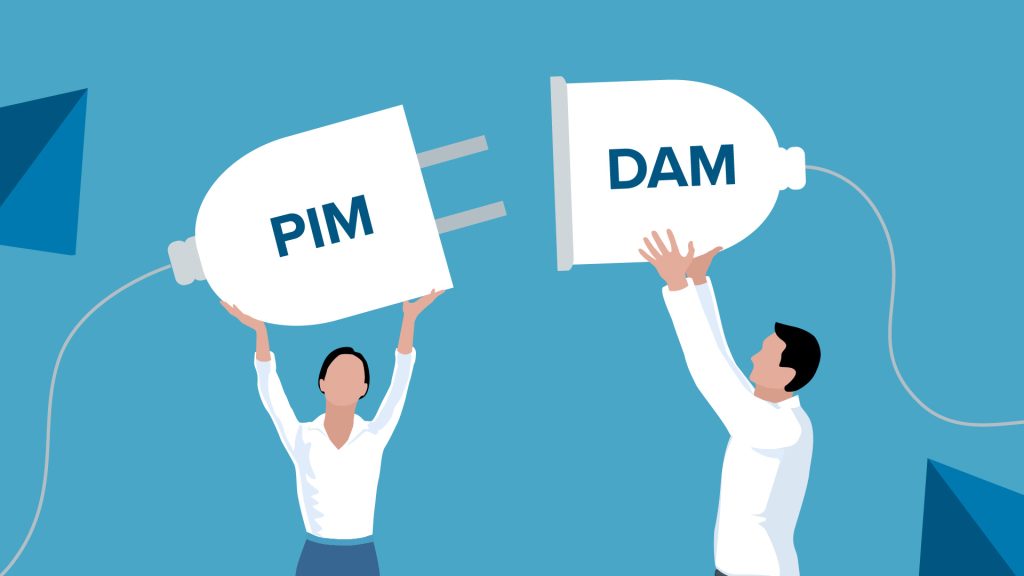
Product data and digital assets are growing faster than the systems designed to manage them. Which PIM and DAM combinations prove themselves in enterprise environments – and what really matters when selecting them?
Table of Contents
What Should Enterprises Consider When Combining PIM and DAM?
Simply purchasing two high-end systems does not guarantee success. The architecture of the Content Supply Chain requires strategic alignment based on six core pillars:
- Native connectivity: Seamless integrations – such as CELUM with Akeneo – replace costly custom developments with ready-to-use connectors and automatic data synchronisation.
- Enterprise performance: Systems must deliver guaranteed speed with over one million assets and globally distributed teams – without compromising availability or loading times.
- AI automation: AI-supported tagging and automated text generation reduce manual maintenance while accelerating time to market.
- Compliance & DRM: Automated validation of licences, usage rights and sales status ensures legally compliant asset usage without manual checks during editorial processes.
- Collaboration: From agency delivery to channel-wide approval, integrated workflows connect internal teams, external partners and approval processes within one system.
- Data integrity: A single source of truth prevents duplication via real-time referencing in the PIM. Changes to assets are immediately reflected across all connected systems.
Top PIM Systems for Enterprises
The PIM market is highly fragmented, ranging from global SAP ecosystems to specialised solutions tailored to the DACH region. The following selection covers the platforms most frequently evaluated by enterprise organisations.
Akeneo

A leading open-source PIM with a strong focus on Product Experience Management (PXM). Widely adopted in e-commerce and retail environments where enriched product data needs to be distributed across multiple channels.
- Features: Product catalogue management, AI-powered content localisation, data quality monitoring, omnichannel distribution, workflow automation
- Pricing: Community Edition free (open source); Enterprise Edition from approximately €35,000 per year; SaaS packages (Growth, Advanced, Premium) available upon request
- Integrations: CELUM, Magento, PrestaShop, Shopify, Amazon, Google Shopping, Bynder, SAP and many others via the Akeneo Marketplace
Stibo STEP
An enterprise-grade MDM platform with a strong focus on data quality, governance and compliance. Recognised as a leader by Forrester in the PIM/MDM space. Particularly suited to global organisations with complex master data structures.
- Features: Data modelling, quality assurance, governance and compliance, AI-enabled data management, business rules, workflow management
- Pricing: Enterprise pricing available on request; typically deployed in large organisations with customised implementation projects
- Integrations: SAP, Salesforce, MongoDB, Amazon SQS, CELUM, REST/JSON interfaces, ETL tools, Ariba
SAP Commerce Cloud

An integrated commerce platform featuring native PIM capabilities within its Product Content Management (PCM) environment. Ideal for organisations already invested in the SAP ecosystem and seeking a fully integrated commerce solution.
- Features: Product catalogue and category management, pricing management, multilingual support, channel management, direct ERP integration
- Pricing: Enterprise licensing available on request; part of the SAP Business Technology Platform
- Integrations: SAP ERP, SAP CRM, CELUM, inRiver, the wider SAP Commerce ecosystem, Adobe Commerce
Xmedia

A specialised PIM solution developed by myview systems GmbH. Designed for technically demanding industries and media-centric organisations. With more than 20 years in the market, it is particularly strong in catalogue and print publishing workflows.
- Features: Product information management, print and catalogue production, industry-specific functionality, REST API connectivity
- Pricing: Available on request; typically implemented on a project basis
- Integrations: CELUM, ERP systems, CMS platforms, Shopware, and API-based integrations with broader PIM and DAM ecosystems
Pimcore

An open-source platform combining PIM, DAM, MDM and CMS capabilities in a single solution. Recognised by Gartner and Forrester. Offers exceptional flexibility but requires dedicated technical resources for implementation and customisation.
- Features: PIM, DAM, MDM, CMS, digital commerce, AI-enabled MCP integrations, multichannel publishing, data governance
- Pricing: Community Edition available free of charge; commercial starter licences available; Enterprise Edition on request
- Integrations: CELUM, Shopify, Adobe Commerce, open REST APIs, ERP systems, CRM platforms
novomind iPIM

A modular PIM solution from Hamburg with a strong focus on AI-driven content automation. Part of the novomind Digital Commerce Platform and widely used in German-speaking retail organisations and supplier onboarding processes.
- Features: AI-powered content creation, supplier onboarding, workflow enrichment, print publishing, omnichannel distribution, MDM functionality
- Pricing: Modular licensing model available on request; modules include iPIM Supply, Analytics, Print and Buy
- Integrations: CELUM, SAP (via SEEBURGER), e-commerce platforms, REST API/JSON interfaces
Inriver

A SaaS-based PIM platform renowned for handling complex product hierarchies, bundles and variant configurations. Well suited to manufacturers and B2B organisations operating extensive dealer networks and omnichannel commerce strategies.
- Features: Channel-specific catalogues, AI-powered relationship suggestions, syndication connectors, omnichannel marketing, workflow automation
- Pricing: SaaS subscription available on request; pricing based on users and modules
- Integrations: SAP Commerce Cloud, Bynder, CELUM, ERP systems, CRM platforms and e-commerce solutions through the inRiver Integration Framework (IIF)
Informatica

An enterprise PIM solution within Informatica’s Intelligent Data Management Cloud (IDMC). Targeted at highly regulated industries such as automotive, pharmaceuticals and retail. Combines PIM and MDM with AI-driven master data management.
- Features: Audit trails, data lineage, governance workflows, CLAIRE AI Copilot, MDM integration, data quality management, Agentforce extension
- Pricing: Enterprise pricing; MDM subscriptions typically start at approximately $200,000 per year; custom pricing available on request
- Integrations: Salesforce, SAP, CELUM, Google Vertex AI, Databricks, Microsoft Fabric, AWS Redshift
Top DAM Systems for Enterprises
The enterprise DAM market is dominated by five leading platforms. Beyond core functionality, key selection criteria include the depth of PIM integration, AI capabilities and global scalability.
CELUM
A European high-end DAM platform designed for complex retail and manufacturing environments. The only dedicated brand management solution specifically built for multi-brand organisations. Customers include BAUHAUS, CLAAS and voestalpine.
- Features: Enterprise DAM, review and approval workflows, tailored audience portals, content templates, Product Content Studio, CELUM AI, insights and analytics
- Pricing: Enterprise pricing available upon request
- Integrations: Akeneo, Stibo STEP, SAP Commerce Cloud, Pimcore, novomind, xmedia, Adobe Creative Cloud, SharePoint, Salesforce, inRiver and many more
Adobe Experience Manager Assets

A scalable DAM hub within Adobe Experience Cloud. Particularly powerful for organisations already using Adobe Commerce, Adobe Analytics and Creative Cloud. The company is U.S.-owned, which may be an important consideration for organizations assessing data sovereignty and compliance with the U.S. CLOUD Act.
- Features: AI-powered asset tagging, automated workflows, rich media delivery, event-driven PIM integration
- Pricing: Enterprise pricing available on request and tailored to company requirements
- Integrations: Adobe Creative Cloud, Pimcore, SAP and certified partner connectors via Adobe I/O
Bynder

A composable DAM platform from the Netherlands offering more than 140 pre-built integrations. Strong in brand governance, creative workflows and video production. The company is U.S.-owned, which may be an important consideration for organizations assessing data sovereignty and compliance with the U.S. CLOUD Act.
- Features: Asset search and preview, version control, permission-based access, brand templates, built-in analytics
- Pricing: Available on request; based on users, storage requirements and selected modules
- Integrations: Akeneo, inRiver, Salsify, WordPress, Drupal, Sitecore, Getty Images, Shutterstock and Hootsuite
Aprimo

An enterprise DAM platform with a strong emphasis on marketing governance and marketing resource management. Widely used by Fortune 500 organisations with demanding compliance requirements. The company is U.S.-owned, which may be an important consideration for organizations assessing data sovereignty and compliance with the U.S. CLOUD Act.
- Features: AI-powered auto-tagging, flexible metadata structures, role-based permissions, marketing governance, workflow automation
- Pricing: Subscription model; customised pricing available on request
- Integrations: Akeneo (via open-source connector), inRiver and CMS platforms through Aprimo Connect
Sitecore Content Hub
A unified content platform combining digital assets, content operations and commerce experiences within a single ecosystem. Ideal for enterprises looking to consolidate DAM, CMS and commerce capabilities.
- Features: DAM, content operations, digital rights management, CI Hub Connector with 57+ integrations, Creative Cloud integration, multichannel publishing
- Pricing: Enterprise pricing available on request
- Integrations: Adobe Creative Cloud, Microsoft 365, Google Workspace, Figma and PIM solutions via the CI Hub Connector
Proven PIM & DAM Combinations
The ideal combination depends on your existing technology landscape, team structure and channel-specific requirements. The following pairings have proven particularly effective in enterprise environments.
CELUM PIM Connectors
CELUM: Through its Marketplace, CELUM offers a growing portfolio of certified PIM connectors. Each integration is ready to use out of the box and is developed and maintained by specialised partners.
- Akeneo + CELUM: Enterprises benefit from native connectors that enable product metadata from Akeneo to flow directly into CELUM, while image URLs are synchronised back to Akeneo in real time. The result is a plug-and-play integration designed for maximum agility and efficiency.
- Stibo STEP / Informatica + CELUM: Even in environments with more than one million assets and globally distributed teams, these integrations ensure reliable performance and synchronised data flows at scale.
- SAP Commerce + CELUM: This integration enables automated tagging and AI-powered content generation to work seamlessly together. Product data from SAP Commerce can trigger the automated provisioning of digital assets in CELUM, helping streamline content operations.
- novomind / Xmedia + CELUM: This combination allows organisations to support local system landscapes, automate workflows using AI, and significantly reduce time to market in retail environments.
- Pimcore + CELUM: Pimcore’s flexibility, combined with CELUM’s advanced workflows and content portals, creates a highly customised and automated content ecosystem that meets the needs of both developers and marketing teams.
Other DAM Platforms & Integrations
- Bynder: Bynder offers a range of integrations with widely used PIM systems, primarily focused on the exchange of digital assets to ensure brand consistency. Further details on its integrations are available directly from Bynder.
- Aprimo: Aprimo typically connects its DAM structures to leading PIM and MRM platforms through customised enterprise-grade integrations. More information is available from Aprimo.
- Adobe Experience Manager: AEM Assets is generally integrated with enterprise PIM systems such as SAP or Stibo through sophisticated middleware projects, enabling deep integration while also increasing project complexity. Learn more from Adobe Experience Manager.
- Sitecore Content Hub: Sitecore Content Hub aims to tightly integrate digital assets and product content within its own suite, while also providing APIs for external PIM repositories. Further details are available from Sitecore Content Hub.
Best-of-Breed vs All-in-One
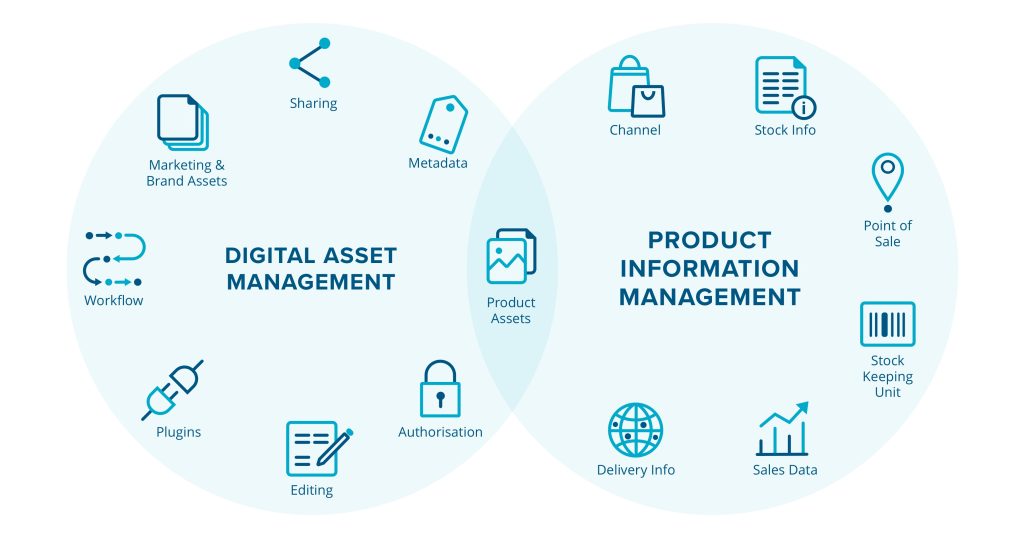
When designing their technology architecture, enterprises face a fundamental choice: an integrated all-in-one platform or a best-of-breed approach that combines specialised systems. Both strategies have their merits, and the right choice depends on company size, the existing IT landscape and long-term business objectives.
With a best-of-breed approach, enterprises select the strongest specialist solution for each domain—for example, a leading PIM for product information and a best-in-class DAM for digital assets. These systems are connected through APIs and standardised integrations. By contrast, an all-in-one approach consolidates PIM, DAM and, in some cases, commerce capabilities within a single platform.
Advantages of Best-of-Breed
A best-of-breed architecture allows enterprises to deploy the most powerful solution for each specific business function. Specialised DAM platforms such as CELUM offer more advanced workflow automation, collaboration capabilities and digital rights management (DRM) than the DAM modules typically found in all-in-one platforms. The same applies to market-leading PIM solutions such as Akeneo or Stibo STEP, which often provide deeper product information management capabilities than the PIM functionality available within broader commerce suites.
In addition, a best-of-breed strategy enables organisations to scale and evolve individual systems independently, without being tied to the development roadmap of a single software vendor. This flexibility allows enterprises to adapt more effectively to changing business requirements and emerging technologies.
When an All-in-One Approach Makes Sense
All-in-one platforms can be a valid choice for small to mid-sized organisations looking to minimise implementation complexity and whose requirements for PIM and DAM functionality are relatively straightforward. A consolidated platform can also offer operational benefits for companies with limited IT resources.
However, for enterprises managing more than one million assets, operating across global teams and facing complex compliance requirements, all-in-one solutions often reach their limitations. In these environments, specialised systems typically provide the scalability, governance capabilities and performance needed to support large-scale content operations.
FAQs on PIM & DAM
What is the difference between PIM and DAM?
A PIM system (Product Information Management) manages structured, text-based product data such as SKUs, product descriptions and technical specifications. A DAM system (Digital Asset Management), on the other hand, specialises in storing, organising and distributing digital assets such as images, videos and graphics. Together, they ensure a consistent, complete and compelling product experience across all channels.
Can a PIM replace a DAM?
No. In most cases, a PIM cannot replace a dedicated DAM, as it lacks the advanced capabilities required for professional media management. A full-featured DAM provides functionality such as automated file conversions, digital rights management (DRM), and the handling of large volumes of rich media assets, including videos. For organisations with sophisticated content operations, PIM and DAM work best as complementary, specialised systems.
What is the difference between PIM, DAM and MDM?
While a PIM manages product information and a DAM manages digital assets, Master Data Management (MDM) serves as the overarching framework for all critical business data. In addition to product information, MDM encompasses data relating to customers, suppliers, locations and other core business entities. Within an MDM strategy, PIM and DAM typically function as specialised data domains that contribute to a unified and governed data landscape.
Does CELUM support existing PIM systems?
Yes. CELUM features an open architecture and offers a wide range of standard connectors and APIs for leading PIM platforms. This enables seamless integration into existing technology environments without the need for redundant data maintenance. Your current PIM can continue to act as the primary source of product information while CELUM manages and distributes the associated digital assets.
Are metadata synchronised between PIM and DAM?
Yes. Automated metadata synchronisation is a standard component of a well-integrated PIM and DAM ecosystem. Product attributes are typically transferred from the PIM to the DAM to improve asset discovery and searchability, while the DAM returns asset links, previews and related media information back to the PIM. This ensures that data remains consistent and up to date across both systems without manual intervention.
Does CELUM support local systems like novomind or xmedia?
Yes. CELUM offers proven integrations for both platforms, including novomind Connect and the xmedia AssetBrowser. These integrations enable automated, bidirectional synchronisation of data, product structures and digital assets directly with CELUM. As a result, organisations can establish efficient and reliable workflows even within highly specialised or local system environments.