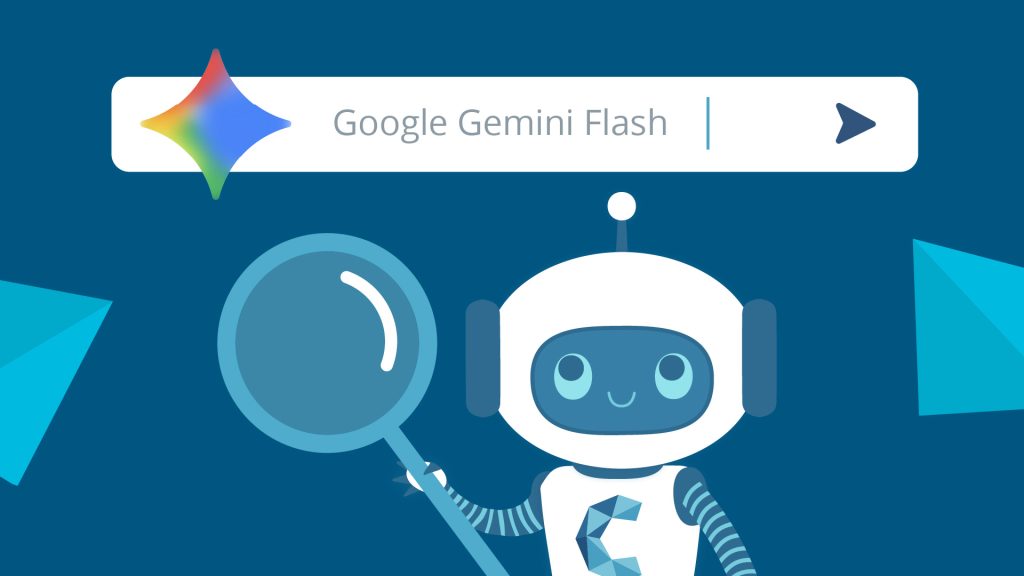
Google unveiled the biggest update to its search box in more than 25 years at I/O 2026, establishing Gemini 3.8 Flash as the new default model powering Google AI Search. This marks a shift that fundamentally redefines not only SEO strategies but also digital marketing within organisations.
The most important facts about Google AI Search at a glance:
- Google’s new intelligent search expands dynamically, provides AI-powered query formulation assistance that goes beyond traditional autocomplete, and accepts text, images, files, videos and Chrome tabs as inputs.
- New Search Agents work continuously in the background, taking over research tasks and, in the future, potentially booking-related activities.
- Generative UI (User Interface) will create customised dashboards, including relevant visual tools and simulations.
Table of Contents
What's New About Google's AI Search? (The I/O 2026 Upgrade)
On 19 May 2026, Google unveiled a fundamentally redesigned search experience at its I/O 2026 developer conference. At its core is a new intelligent search box, an evolution of the AI Overviews and AI Mode already familiar to users. According to Google, it represents the largest search upgrade in more than 25 years.
Google AI Search is designed to become more intuitive and no longer limited to text input. Images, videos, data files and entire browser tabs can also be used as inputs. Follow-up questions are supported as well, meaning the new Google AI Search can answer questions within the context of an ongoing conversation, much like today’s LLMs.
What will be new:
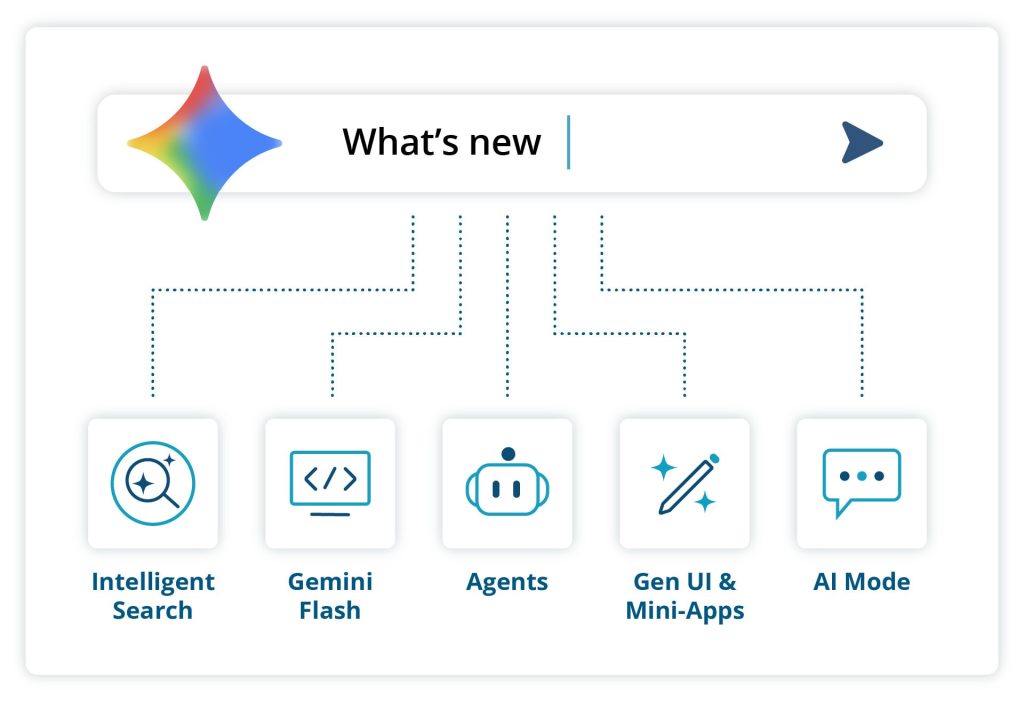
- Google’s Intelligent Search: Dynamically adapts to long, conversational queries, provides AI-powered assistance when formulating complex questions and processes text, images, files, videos and open Chrome tabs as inputs.
- Gemini 3.8 Flash: The new global default model in AI Mode, with improvements over Gemini 3.1 Pro in coding, agentic and multimodal tasks.
- Search Agents / Information Agents: These agents operate continuously in the background, analysing websites, news portals, social media and real-time data, then automatically informing users of relevant developments such as housing opportunities, event tickets or product launches.
- Generative UI and Mini Apps: Google AI Search creates tailor-made interfaces on demand, ranging from one-off visualisations such as tables and charts to persistent, customised dashboards for recurring tasks. Google refers to these as “Mini Apps”, such as trackers or planners.
- Seamless Transition from AI Overview to AI Mode: Users can ask a follow-up question directly from an AI Overview and move seamlessly into conversational AI Mode while retaining context.
What will not launch everywhere immediately:
As with many previous Google updates, not every feature will launch immediately or globally. Initial availability is generally limited to the US market.
- Booking agent functionality, such as AI systems that can independently schedule appointments on behalf of users, will initially launch only in the United States.
- Information Agents will launch during summer 2026, initially only for Pro and Ultra subscribers.
- Mini Apps for continuous tasks will roll out in the coming months, initially only for Pro and Ultra users in the US market.
What remains unchanged:
Despite these changes, several core elements remain intact:
- Users will continue to receive traditional search results alongside AI-generated experiences.
- The traditional search box will remain available alongside Google’s new AI-powered search interface.
- Sources and links will remain a permanent component of search as the transformation unfolds gradually.
- According to Google’s official optimisation guidance for generative AI experiences, the company does not fundamentally distinguish between traditional search and Google AI Search. Both still rely on SEO principles, including the same quality and spam guidelines.
The Technology Behind Interactive Search Results
The new capabilities are powered by several technical components. Gemini 3.8 Flash provides the foundation for conversational and agentic experiences. For Generative UI, Google leverages Antigravity, its internal agentic coding platform, to assemble search results in real time from components such as interactive visualisations, charts and simulations.
Information Agents are considered a natural evolution of Google Alerts, but now enhanced with frontier-level language model capabilities that can recognise context and interpret nuance rather than merely matching keywords.
Why Is Google Transforming Search?
The redesign of the Google AI Search Box is not a cosmetic update. It is a strategic response to several developments occurring simultaneously.
- Growing competitive pressure: OpenAI reported approximately 900 million weekly ChatGPT users in February 2026.
- Changing user behaviour: Users increasingly ask complex, conversational questions instead of entering short keyword queries.
- Strategic repositioning: Sundar Pichai, CEO of Google, described the I/O 2026 announcements as the start of the “agentic Gemini era“, where AI systems no longer simply respond to prompts, but also plan, reason and act independently.
Criticism: Why Google's AI Search Is Being Debated
The new developments are being critically discussed by publishers and SEO professionals, particularly because of their potential impact on external website traffic.
Reports suggest that approximately 60 per cent of searches are now zero-click searches. Individual publishers have reported traffic declines, including:
- HubSpot: 70 to 80 per cent
- Chegg: 49 per cent
- DMG Media: up to 89 per cent for specific search queries
Penske Media filed an antitrust lawsuit against Google, documenting CTR declines of up to 58 per cent.
The EU has also required Google to share certain data with competitors under the Digital Markets Act, with a compliance deadline of 27 July 2026.
However, not all publishers report dramatic declines. According to leadership within Daily Mail’s SEO team, visibility within AI Overviews for non-branded searches has recently remained relatively stable, while targeted investments in content continue to deliver results.
Pichai himself rejected the idea of a complete traffic collapse and emphasised the ongoing and evolutionary nature of the transformation.
The Impact on SEO and Website Content
For website owners, the update represents a significant shift in success metrics: away from pure click optimisation and towards visibility within AI-generated answers.
Zero-Click Searches: When Google Builds the Answer Itself
An increasing number of searches end without users ever visiting an external website because the AI summary provides the answer directly within search.
Top-ranking pages are especially affected. Where a strong ranking previously guaranteed clicks, click-through rates often drop significantly once an AI-generated response appears.
Ranking position and actual traffic are becoming increasingly disconnected. Strong visibility is no longer a guarantee of website visits.
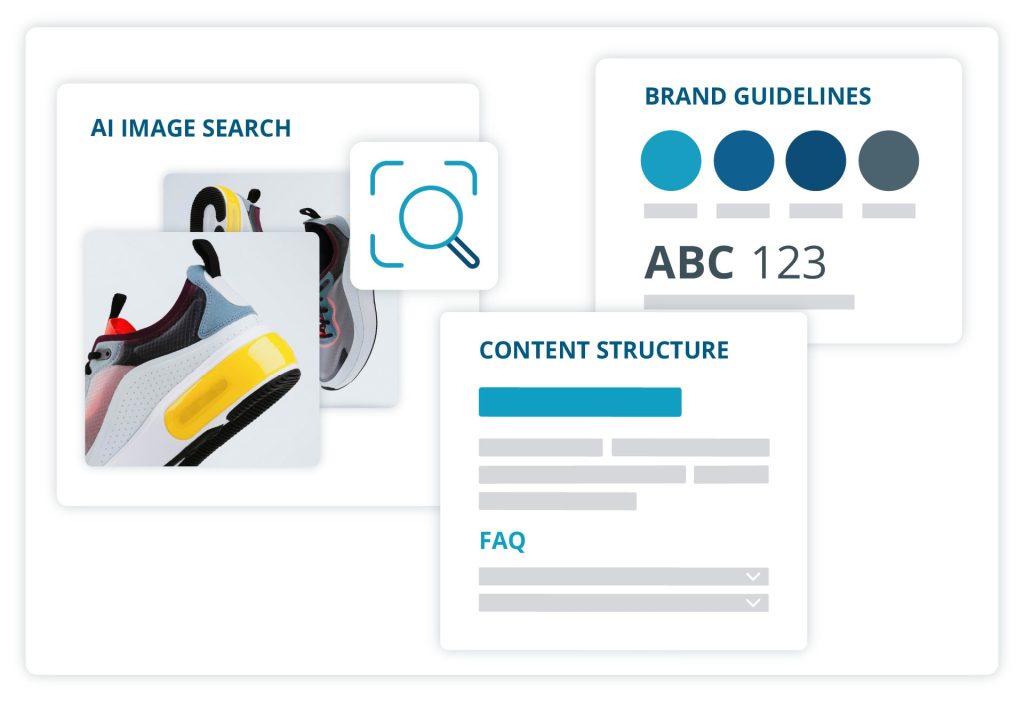
For brands, visibility must therefore be considered beyond traditional clicks, including through AI-powered image search and strategic preparation for Agentic Commerce and GEO.
Citations, Brand Mentions and Search Intent in Focus
Google’s intelligent search increasingly thinks in sentences rather than keywords.
A strong ranking therefore becomes a prerequisite for AI citation, but no longer guarantees traffic.
The signals that drive citations differ noticeably from traditional ranking factors. AI systems increasingly favour:
- Original reporting
- Expert insights
- Content demonstrating clear subject-matter authority
Generic content optimised purely for algorithms is cited less frequently.
As a result, maintaining a consistent and recognisable brand presence becomes increasingly important. Learn more in our article on creating stable Brand Guidelines.
Structure Matters More Than Ever
Google itself emphasises in its official optimisation guidance that established SEO best practices remain the best preparation for AI-powered search experiences.
Clear, fact-based and technically well-structured content is more likely to be used by AI systems, discovered by Search Agents and incorporated into Generative UI experiences.
Even after the decline of traditional FAQ snippets, question-and-answer structures remain highly relevant.
AI-driven search systems ranging from Google to ChatGPT and Perplexity continue to rely heavily on clearly structured content when constructing answers, regardless of whether this structure is visibly displayed within search results.
Conclusion: How to Prepare Your Website for Google's Intelligent Search
Three priorities are particularly worthwhile:
- Focus on original, verifiable expertise rather than generic content.
- Keep structured data such as FAQ and Article markup up to date.
- Actively strengthen brand awareness and authority.
Since the rollout of these new features is occurring gradually across different regions, it is also important to continuously monitor which capabilities are already available in your market. As Google continues to update its AI models at a rapid pace, with Gemini 3.8 Flash, for example, launching just three weeks after its predecessor, and as new search features are often rolled out region by region rather than globally, continuous market monitoring has become essential. Only by keeping a close watch on these developments can SEO professionals respond in time to new features, changing user behaviour and shifts in search rankings.
For further reading on Agentic Search and E-Commerce or on how to make your website AI-ready, visit our blog section.