In a fully digitalised world, it is becoming increasingly difficult for companies to efficiently structure, find, and share all their digital content, known as “digital assets.” Digital Asset Management (DAM) software helps organisations ensure consistency, brand integrity, and efficiency across all content processes.
Table of Contents
What is Digital Asset Management?
Digital Asset Management (DAM for short) is the process of managing, organising, and distributing digital assets from a central content location or hub.
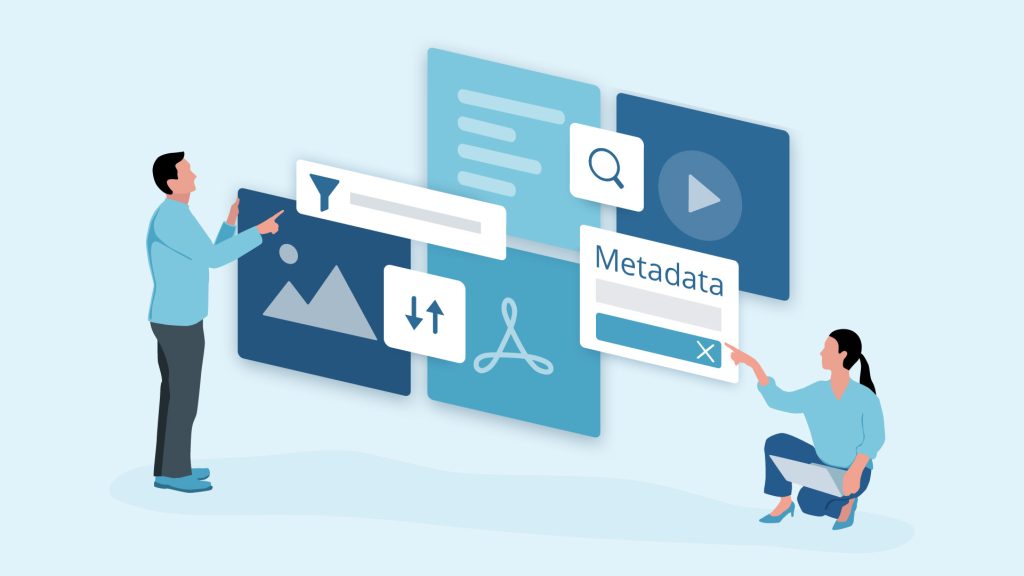
DAM helps companies manage their digital content throughout the entire digital asset lifecycle. DAM software supports the creation, storage, organisation, reuse, editing, and distribution of digital files. Each file is assigned metadata – descriptive information that simplifies the search and management of all content within the organisation.
To further enhance the efficiency of this lifecycle, DAM can be extended with solutions such as a Product Content Studio or Content Templates.
At the same time, DAM systems can be tailored to a company’s specific requirements and workflows, making them flexible tools for managing different types of content across departments.
What are digital assets?
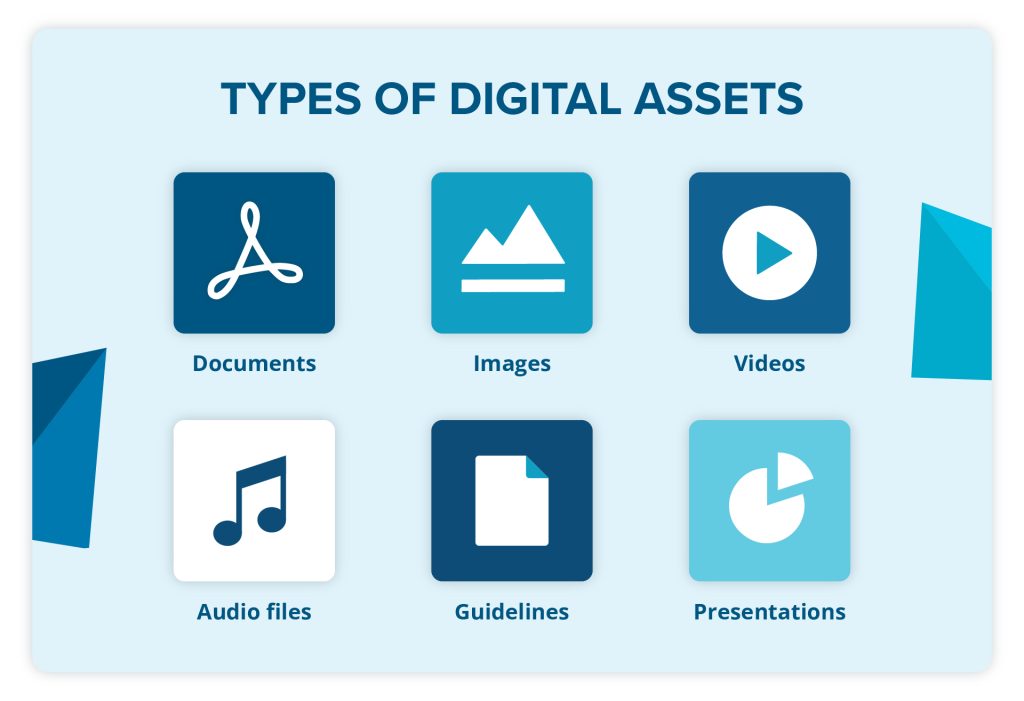
Digital assets are files stored digitally: such as video clips, images, documents, or other digital media. In contrast, any physical content such as a newspaper, magazine, book, or DVD is not considered a digital asset.
The most commonly used digital file formats are:
- Images and graphics: logos, infographics, product photos, diagrams
- Videos: tutorials, marketing videos, product presentations
- Audio files: podcasts, jingles, radio spots
- Documents: PDFs, PowerPoint presentations, HTML documents, plain text files, MS Office documents, guidelines
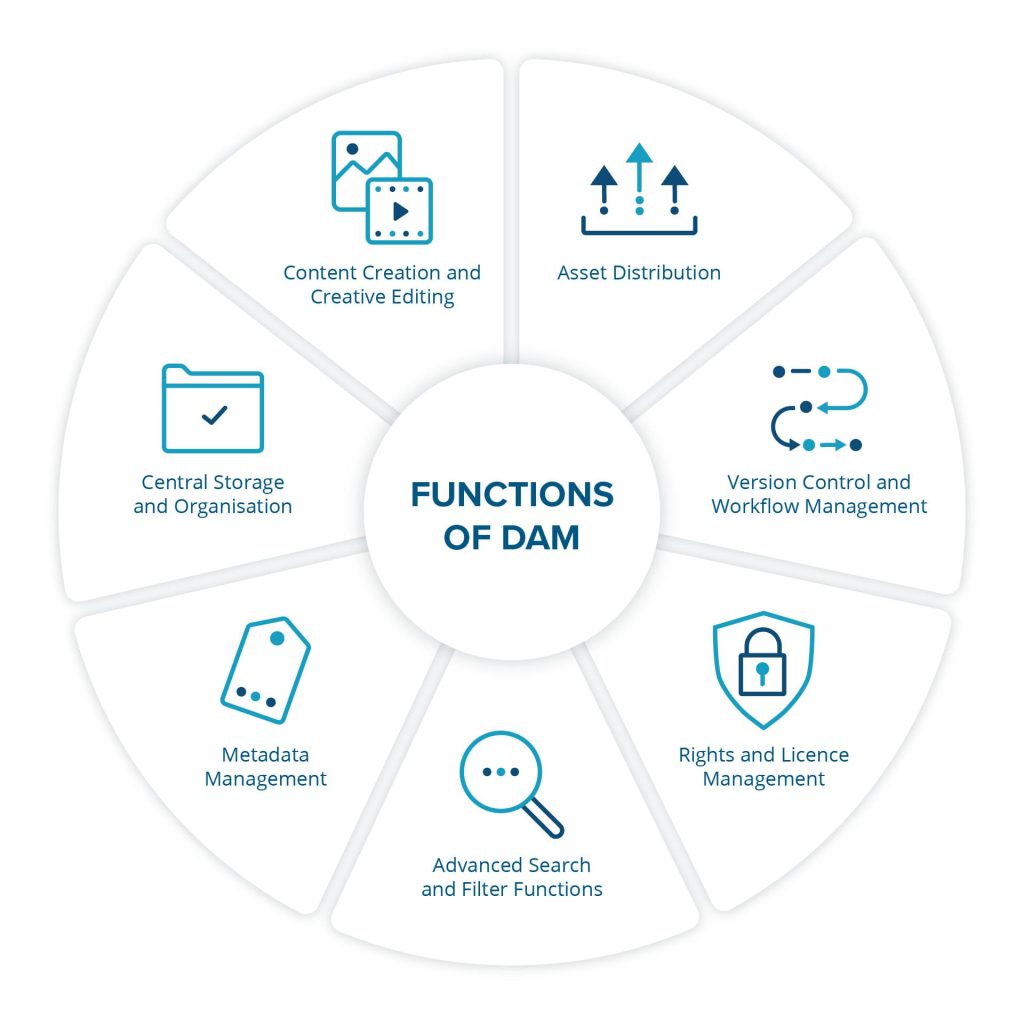
Functions of a DAM system
- Content creation and creative editing
- Central storage and organisation
- Metadata management
- Advanced search and filtering functions
- Rights and licence management
- Version control and workflow management
- Asset distribution
Content creation and creative editing
DAM platforms often integrate content creation tools directly into the system. This enables users to work in their preferred tools such as Adobe Suite while synchronising assets with the DAM. This includes creating and editing images and graphics, video editing, and layout design. They also often provide templates and brand guideline integration to scale content creation and ensure brand consistency.
Central storage and organisation
The DAM system serves as the central repository for all digital assets within a company. All files are stored in one place and systematically organised through structured folder hierarchies, categories, and tags. This creates a single source of truth for all digital content, avoiding duplicate content and enabling centralised access control.
Metadata management and tagging
One of the core functions is the comprehensive management of metadata. The system allows assets to be enriched with relevant information such as descriptions, keywords, copyright details, creation dates, and technical specifications. These metadata are essential for later findability and legally compliant use.
Advanced search functions
DAM systems offer powerful search capabilities that go far beyond simple filename searches. Users can search for assets based on metadata, visual similarity, file formats, timeframes, or tags.
Rights and licence management
The system manages usage rights and licence conditions for each asset. It monitors licence periods, alerts users before expiry dates, and ensures that only authorised persons can access certain content.
Version control and workflow management
DAM systems record all changes made to assets and systematically manage different versions. At the same time, they support approval processes through definable workflows in which assets go through various authorisation stages. This prevents the use of outdated or unapproved content.
Benefits of Digital Asset Management
- Consistency in brand presentation
- More efficient file management
- Find assets instantly and save time
- Streamlined production
- Up-to-date and compliant files
- Seamless system integration
- Simplified analysis and optimisation
Consistency in brand presentation
Today, brands must deliver a consistent experience across all channels. With many departments involved in communications, ensuring this consistency is increasingly challenging.
With DAM software, even global companies can provide up-to-date asset versions at all locations and enforce brand guidelines, templates, and other assets to ensure a consistent brand image. This greatly simplifies brand management.
More efficient file management
Sharing files via shared drives and servers often causes problems: version discrepancies, wasted time searching, and accidental overwriting. DAM streamlines the entire file management process and prevents such issues.
Find assets instantly and save time
Centralised storage, along with simplified tagging and filtering, makes locating files easy. Teams can access assets directly via the DAM platform or API integrations within their usual tools.
Streamlined production
A central DAM significantly accelerates the production, use, archiving, and distribution of digital content. Teams can more easily personalise content and use existing templates instead of recreating them. Approval processes are also faster, reducing production time and costs while enabling more efficient use of resources across the company.
Up-to-date and compliant files
Many organisations worry about outdated files being used in marketing or business communications. With DAM, expiry dates, permissions, and version controls can be centrally defined, enhancing asset security and ensuring compliance with governance requirements.
Seamless system integration
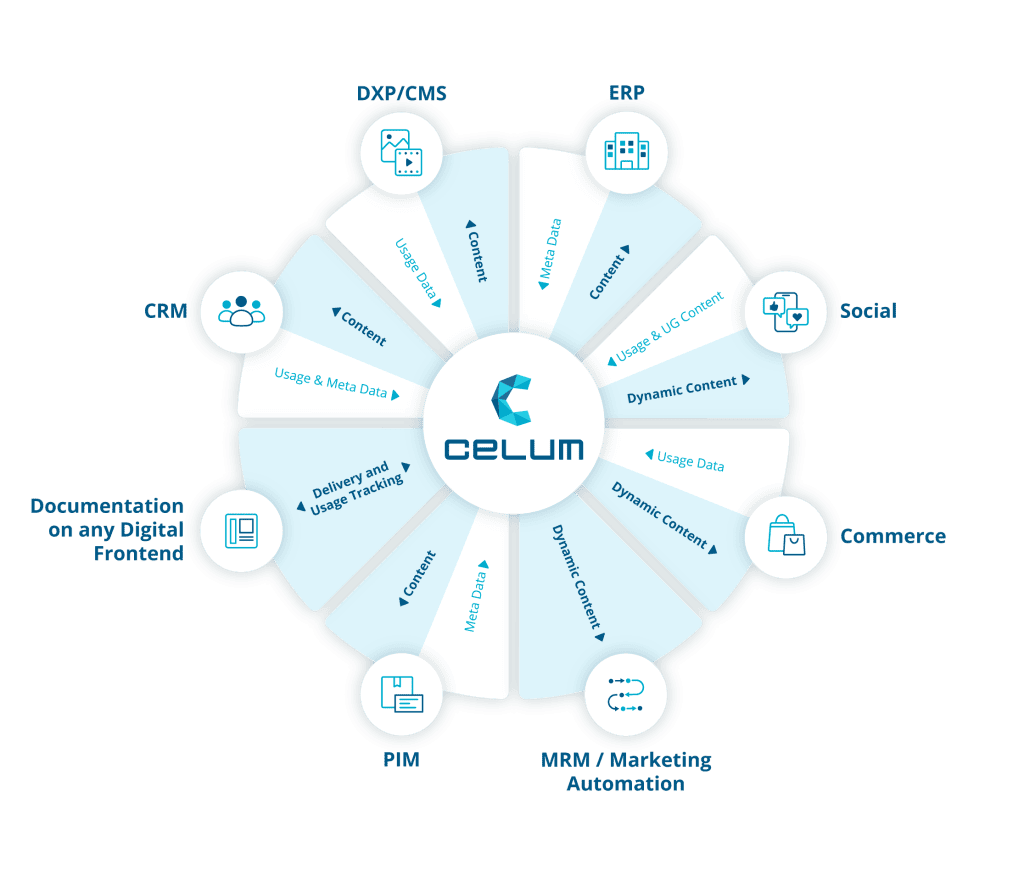
A DAM system can be integrated into your existing infrastructure such as PIM, CMS, or other marketing tools. This allows teams to maintain control over assets throughout their entire lifecycle, from creation to distribution.
Simplified analysis and optimisation
Track asset usage and performance metrics to gain insights and make personalised optimisations to your content.
Who uses DAM processes?
Departments using DAM
Digital Asset Management can benefit nearly every department within an organisation, but certain departments are particularly asset-intensive:
- PR, Marketing & Brand: Create, manage, and distribute campaign and initiative assets.
- IT department: Ensure file compliance across devices and the company’s technology stack.
- Sales: Create sales materials such as presentations, slide decks, and proposals while always working with the latest file versions.
- Legal department: Store and organise relevant and often confidential documents such as contracts securely.
Industries using DAM
DAM is used across industries, particularly in sectors with a high demand for digital content:
- Retail: Manage thousands of product images and marketing materials across multiple channels with consistent usage.
- Consumer goods: Handle extensive product documentation, packaging designs, and marketing materials across markets. DAM ensures consistent branding and faster time-to-market.
- Manufacturing: Manage technical documentation, CAD files, and product photos with always up-to-date versions.
- Lifestyle & consumer brands: Produce high-quality visual content for social media, e-commerce, and campaigns. DAM optimises collaboration and ensures brand consistency across all touchpoints.
Different types of Digital Asset Management systems
DAM systems can be categorised by their focus and use case:
- Brand Asset Management: Focused on storing marketing-related content, logos, and branded assets to support fast campaign execution.
- Product Content Management: Broader scope, storing assets for digital production such as product images, videos, datasheets, or technical drawings.
- Library Asset Management: Simplifies storage and retrieval of assets that rarely change, such as a photo library for authorised users.
They can also be classified by implementation model:
- SaaS: Cloud-hosted on the provider’s servers, accessible via browser. More about Cloud-Based DAM.
- Hybrid: Partly cloud-based, partly on-premise.
- On-premise: Fully operated on the client’s own infrastructure.
A quick introduction of CELUM Digital Asset Management Software
How can CELUM help you?
Book a demo with our experts to find out what CELUM can do for you. CELUM Digital Asset Management is available with our Enterprise plan.
Digital Asset Management Software – What It Is
We’ve mentioned the term – digital asset management software – a number of times in this guide but without proper explanation. Let’s talk about it now, then.
Digital asset management software is a platform you use to conduct the DAM processes we’ve described earlier.
A DAM platform performs a number of functions within an organization:
- It provides a repository where the organization can store digital asset for use when creating, producing and managing content,
- It becomes a digital assets library for shareholders to access digital assets whenever they need to.
- DAM software also facilitates content creation and collaboration, utilizing digital asset management processes across the content’s lifecycle.
- Finally, DAM software facilitates better brand management by enforcing all departments to work with the same, most up-to-date versions of digital assets.
Conclusion
For modern brands, digital asset management processes are not optional – they are essential. They are the only way to handle the vast number and variety of digital assets required to complete projects on time and to specification.
Using the right DAM software also ensures that companies benefit from all the advantages of DAM, ultimately generating a competitive edge.
FAQ
What are digital assets?
Digital assets are any digital files valuable to a company – images, videos, documents, logos, audio files, graphics, and other multimedia content used in marketing, sales, branding, or business processes.
What is Digital Asset Management?
Digital Asset Management (DAM) is the process of centrally storing, organising, managing, and distributing digital content. It enables teams to efficiently find, use, and share their digital resources through automated processes.
How does DAM work?
DAM systems store files in a central database with metadata, search functions, and categorisation. Users can upload, tag, search, download, and share assets through a user interface. Permissions and workflows regulate usage.
Why DAM?
DAM systems bring a wide range of benefits: saving time with fast asset searches, preventing duplicates, ensuring brand consistency, improving collaboration, and reducing costs through more efficient use of existing content. They also protect against licence violations and data loss.