What used to take hours of manual work can now be done by artificial intelligence in seconds. AI in Digital Asset Management is transforming the way companies manage digital content, from automatic image recognition and intelligent search to context-aware translation.
Table of Contents
How does AI work in DAM systems?
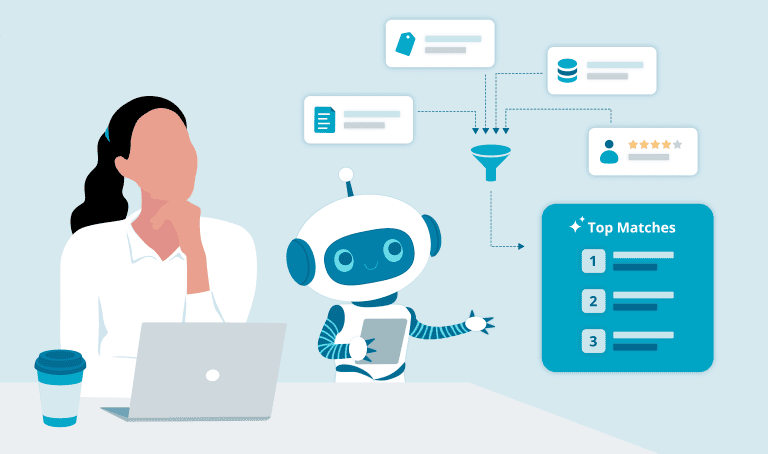
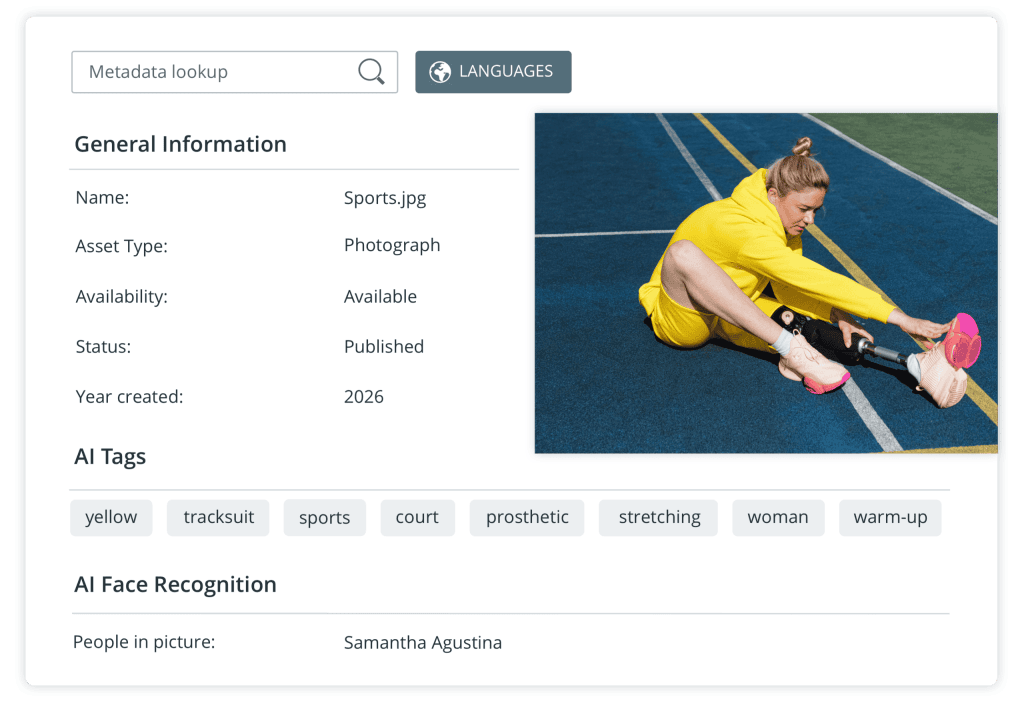
The process typically works as follows. As soon as an asset is uploaded to the DAM system, AI analyses the content. For images, objects, people, scenes, and colours are detected. For videos, this is complemented by audio analysis, including speech and sound recognition.
The insights gained are stored as metadata, making the asset searchable. At the same time, the system continuously learns. The more assets are processed, the more accurate the results become.
Benefits of Digital Asset Management with AI
Integrating artificial intelligence into DAM systems delivers measurable benefits that go far beyond pure efficiency gains.
- Significant time savings through automation: Manual tagging of product images, metadata translation, or video categorisation is largely eliminated. Your teams can focus on strategic and creative tasks, while repetitive work is handled automatically.
- Improved findability: AI-powered features such as visual image recognition make assets fully searchable. Visual similarity search allows you to find relevant assets using reference images. This dramatically reduces search times and prevents valuable assets from getting lost in the system.
- Consistent data quality: People make mistakes, get tired, and work subjectively. AI applies defined standards consistently across all assets. The result is a uniform, high-quality metadata foundation that enables efficient asset management.
- Scalability without additional resources: As your asset library grows, AI performance scales with it, without the need to increase staff proportionally.
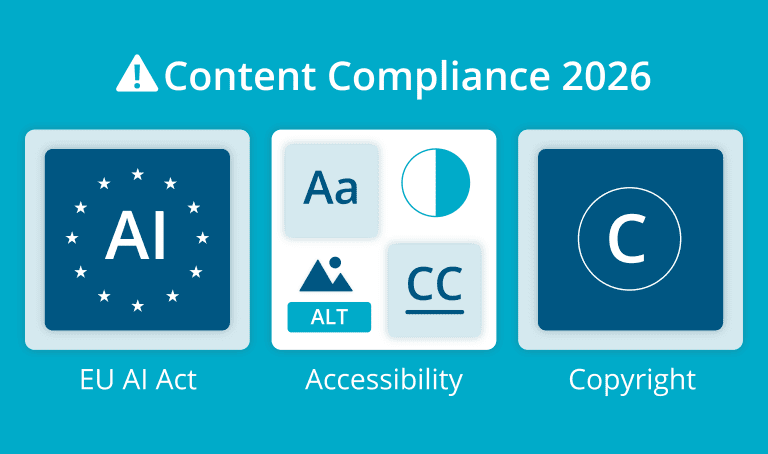
- Better content governance and compliance: AI can automatically identify sensitive content, monitor usage rights, and ensure that only approved assets are used. This reduces legal risk and supports compliance with brand guidelines.
Using AI in DAM: What should you consider?
As promising as AI in Digital Asset Management is, successful implementation requires attention to several key factors.
- Data quality as a success factor: AI is only as good as the data it works with. Before activating AI features, clean up your existing asset base. Remove outdated files and irrelevant assets. A structured folder setup and consistent naming conventions create the foundation for effective AI support.
- Training and change management: Even the best technology is ineffective if teams do not accept it or know how to use it. Invest in training and clearly communicate that AI supports your teams rather than replacing them.
- Data protection and compliance: AI systems process large volumes of data that may include personal information or confidential business content. Make sure you understand where data is processed, which security standards apply, and whether the solution is GDPR-compliant.
- Realistic expectations: AI is powerful but not flawless. Automatically generated tags should be reviewed on a sample basis. Plan a quality assurance process to identify and correct incorrect results. AI learns from these corrections and improves continuously.
- Technical integration: Check whether the AI solution is compatible with your existing IT infrastructure. Are APIs required? Are there integrations with systems such as PIM, CMS, or marketing automation tools?
CELUM high-end DAM: Our AI features at a glance
CELUM integrates state-of-the-art AI technologies that take your asset management to the next level. All solutions are seamlessly integrated into the CELUM platform and ready to use quickly.
Automatic tagging
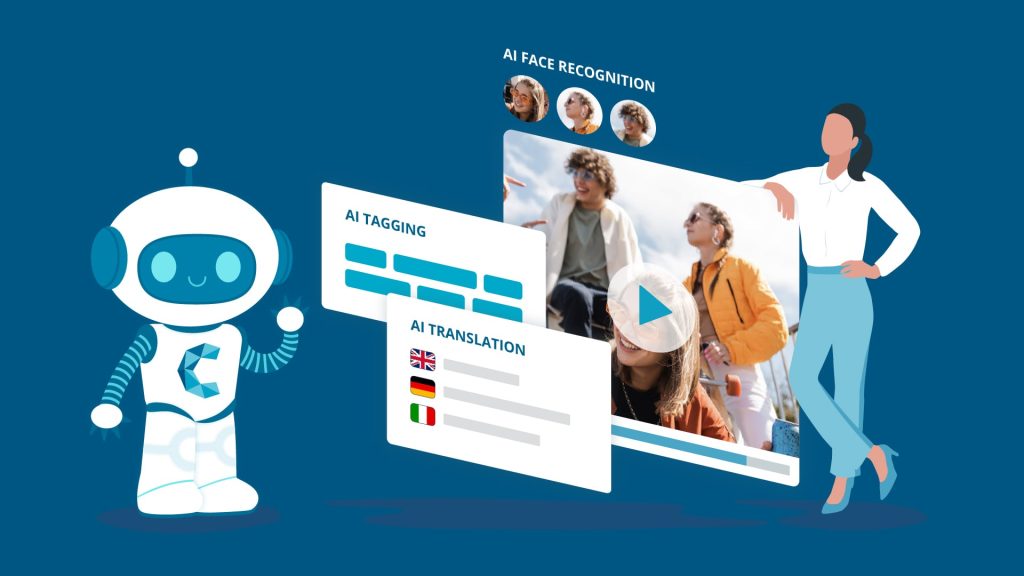
With the CELUM Autotagger, you automate the most time-consuming task in asset management: tagging. The extension recognises and tags individual assets or entire folder structures with just one click. The generated tags are precise, consistent, and free from the subjectivity of manual tagging.
The Autotagger is available for our SaaS offering and can be easily integrated into existing CELUM projects.
Image recognition
Face recognition using Microsoft Azure Face Recognition and text extraction automatically enrich assets with useful metadata, for example by identifying people in images or product descriptions on packaging. This allows you to find the assets you need much faster.
Visual similarity search is particularly powerful. You upload a reference image, and AI finds visually similar assets in your library. This is especially valuable for designers and creative teams looking for stylistically consistent visuals or developing a cohesive visual identity.

Translation
By integrating DeepL or Microsoft Azure Translation into CELUM, metadata is translated automatically and contextually directly within the system. Content can be translated into multiple languages with exceptional accuracy and efficiency.
In addition, CELUM AI enables full-text search even in languages that are not directly supported. This makes it easy to find the right content at any time.
Video analysis
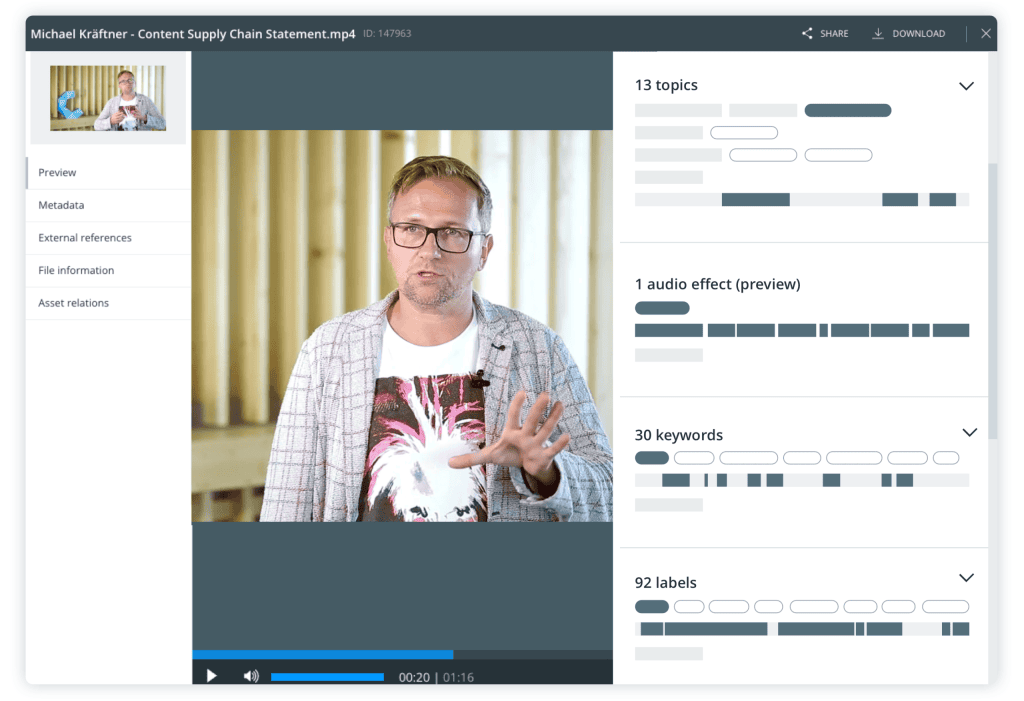
Integration with Microsoft Azure Video Analyzer makes the content of your videos accessible for asset management. The AI-based solution automatically extracts actionable insights from video material, both visually and acoustically.
You can search for people, projects, visible text, spoken language, topics, and much more. Use transcription and translation to easily create subtitles in multiple languages.
AI in Digital Asset Management in summary
Artificial intelligence has fundamentally transformed Digital Asset Management, from a largely manual discipline into an intelligent, automated one. The technology takes over time-consuming routine tasks such as tagging, categorisation, and translation, while improving the quality and consistency of the data foundation.
At the same time, using AI in DAM requires realistic expectations and continuous optimisation to achieve long-term success. With CELUM, you get a powerful DAM system that seamlessly integrates cutting-edge AI technologies and is ready to use quickly.